
Last updated November 3, 2026
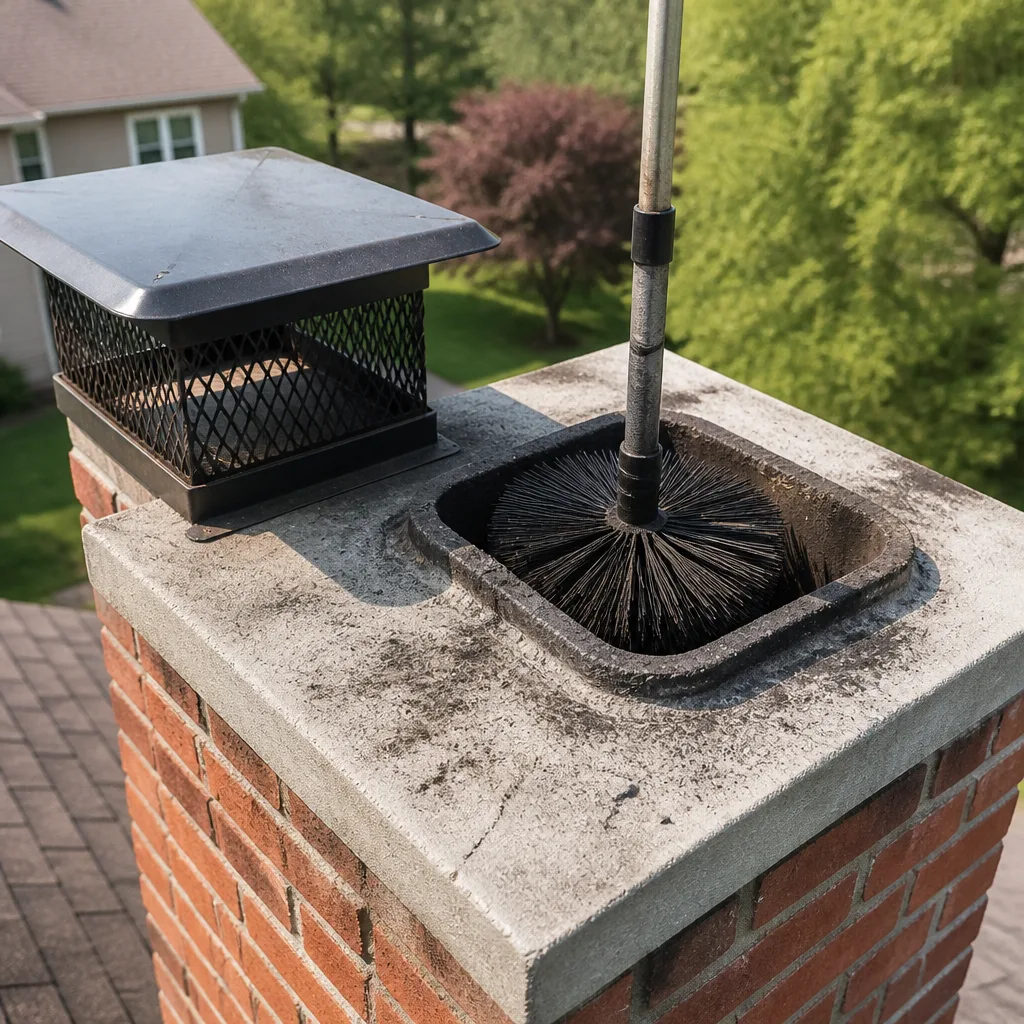 Sweep & inspection
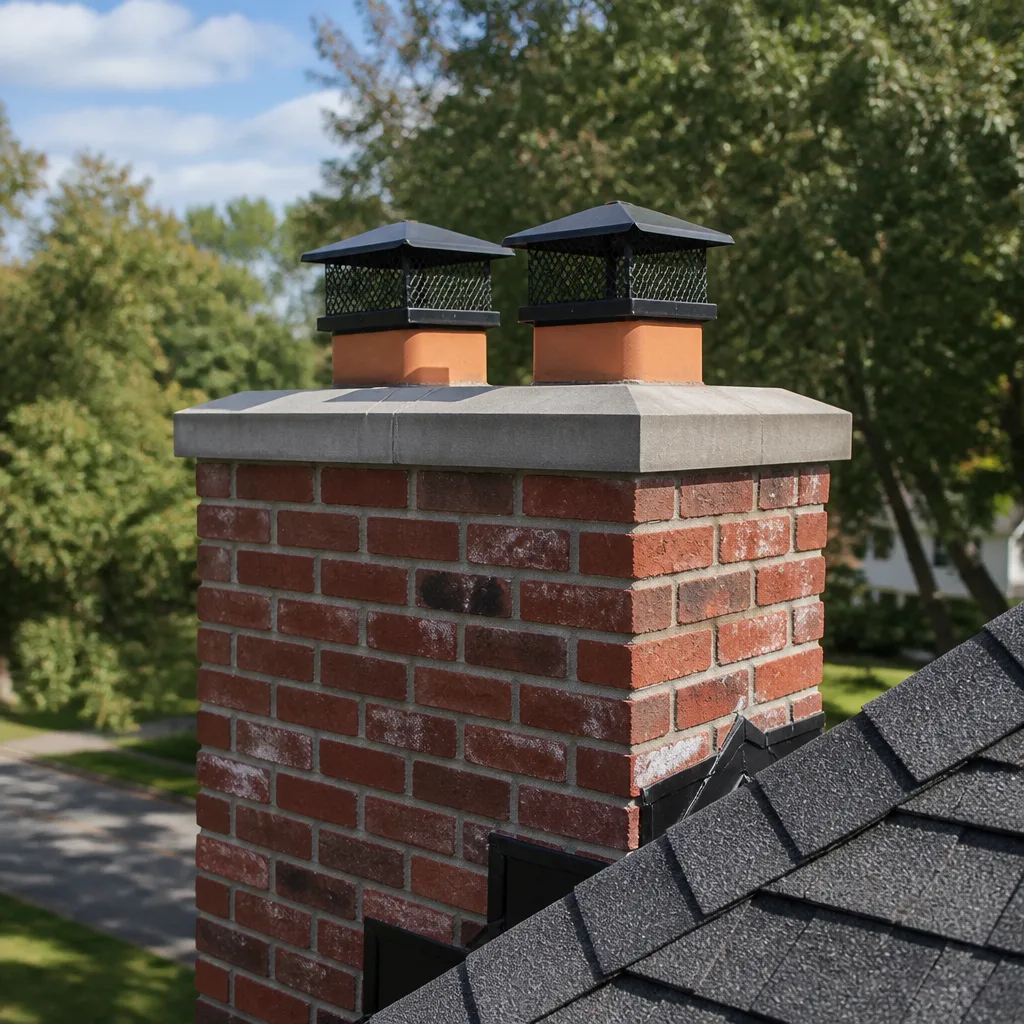 Caps & crowns
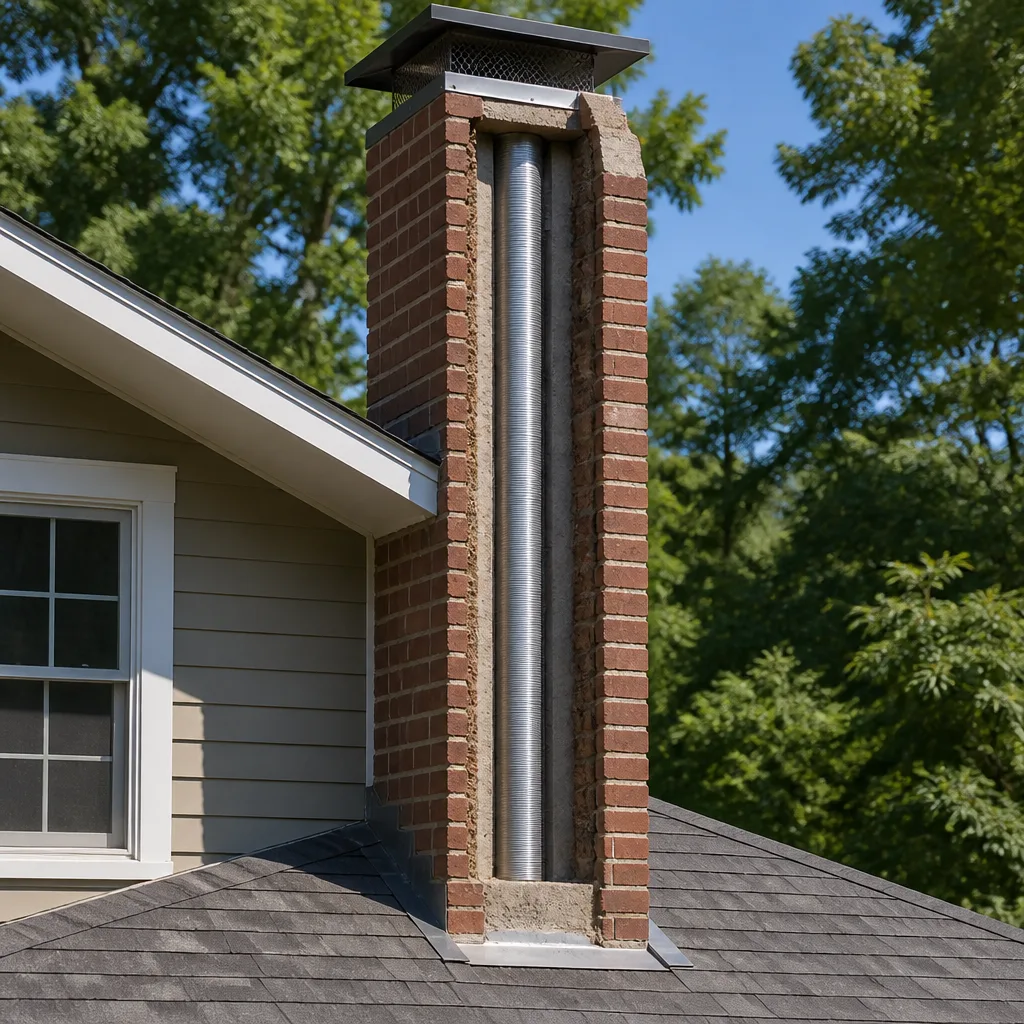 Flue relining
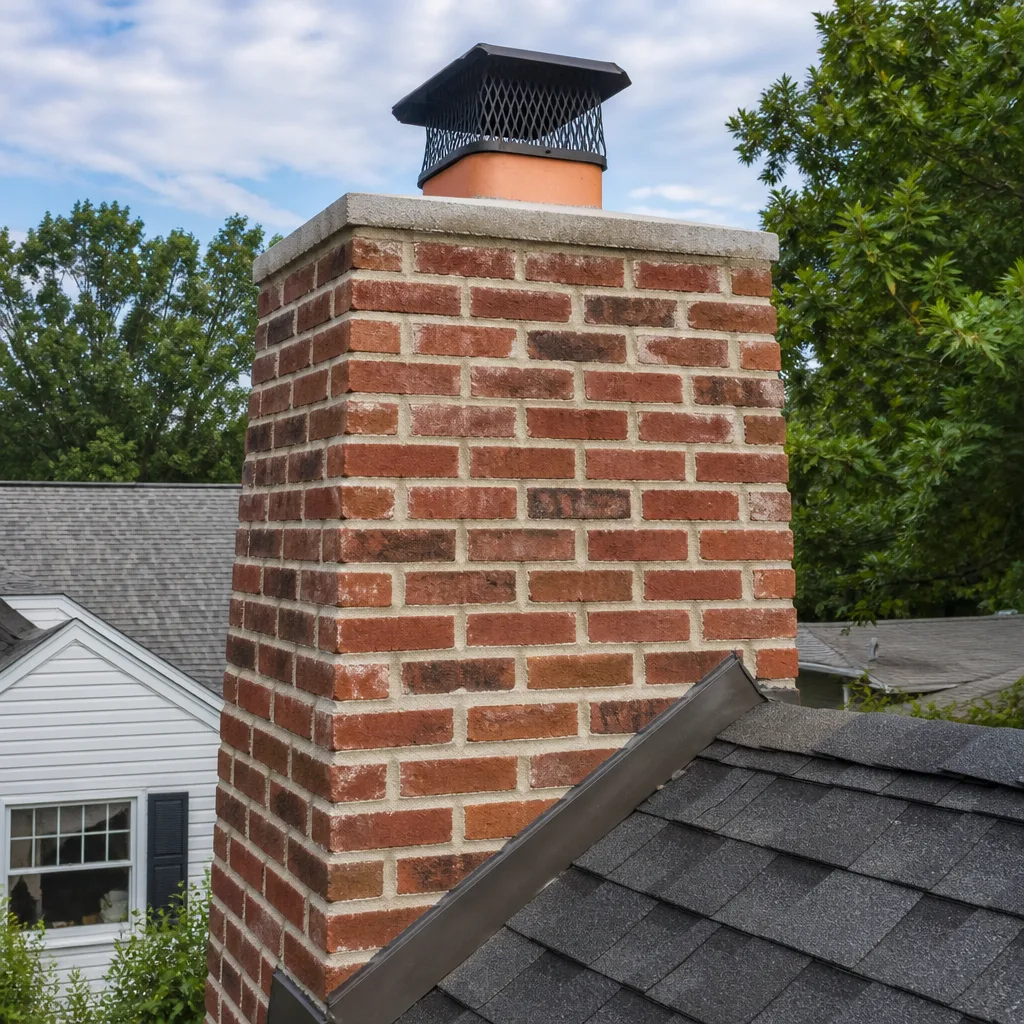 Masonry repair
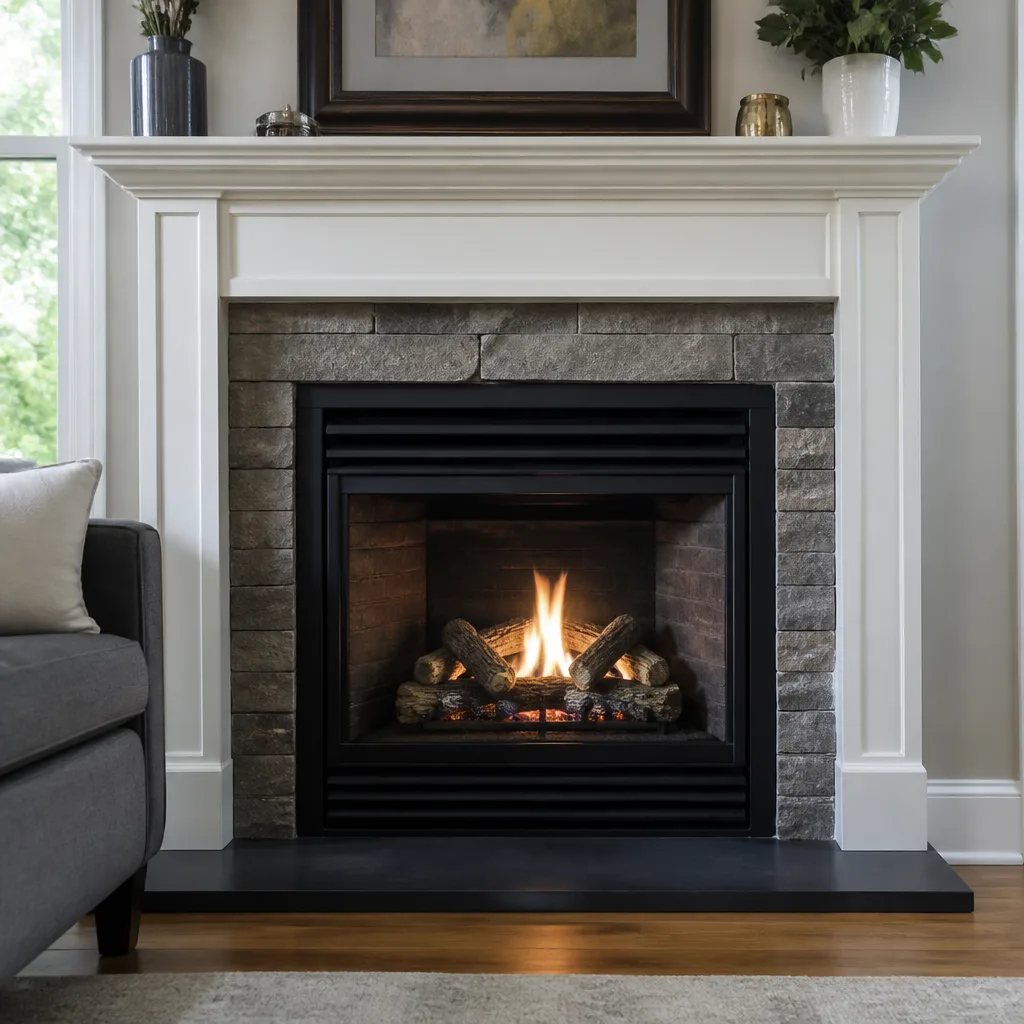 Gas fireplace service
Level 1 sweep and inspection to the NFPA 211 annual standard - flue, crown, cap, and flashing checked and photographed
Chimney sweep logs do not sweep chimneys. They loosen some creosote - which then falls where a brush and vacuum still have to collect it.
The Complete Chimney Sweep Guide for Norwalk Homeowners
Most Norwalk homeowners burn fewer than 15 fires a year. That fireplace gets lit for holiday gatherings, the occasional chilly December evening, maybe a Super Bowl Sunday. So when the topic of chimney sweeping comes up, the natural assumption is: barely used, barely dirty, nothing to worry about. Here’s what we see instead. A chimney that hosted thirty fires over three winters can fail a Level 2 inspection for reasons that have nothing to do with creosote. Bird nesting in the flue. Mortar spalling from coastal humidity that works its way into the 90650 corridor year-round. Damper seals that deteriorated while the fireplace sat cold through nine months of marine layer. This guide explains what a chimney sweep in Norwalk actually involves, what the inspection levels mean, how to read a sweep report without getting upsold, and why a clean chimney is not automatically a safe chimney.
Quick Answer
A chimney sweep in Norwalk costs between $179 and $350 for a standard Level 1 inspection and cleaning, and the entire process takes 45 to 90 minutes. The sweep involves a rotary brush system, a visual inspection of the firebox and flue, and a written report classifying any creosote or structural findings. Because Norwalk’s coastal air accelerates mortar and liner degradation even in low-use fireplaces, the National Fire Protection Association recommends an annual inspection regardless of how often you actually burn.
Styles & brands we work with
- Sweep & inspection
- Caps & crowns
- Flue relining
- Masonry repair
- Gas fireplace service
Table of Contents
- What a Professional Chimney Sweep Actually Involves
- Why Low-Use Fireplaces in Norwalk Still Require Annual Inspection
- The Three NFPA 211 Inspection Levels, Explained Without Jargon
- How Marine-Layer Humidity Damages Chimneys in the 90650 Corridor
- What a Sweep Does Differently from a Handyman
- How to Read a Sweep Report: Safety Findings vs. Cosmetic Items
- What Chimney Sweeping Costs in Norwalk
- Common Mistakes to Avoid
What a Professional Chimney Sweep Actually Involves
A proper sweep is not someone shoving a brush up a flue and calling it done. It’s a step-by-step diagnostic process that starts at the firebox and ends at the chimney cap, with documentation at each stage. Here’s what we do on every sweep, in order.
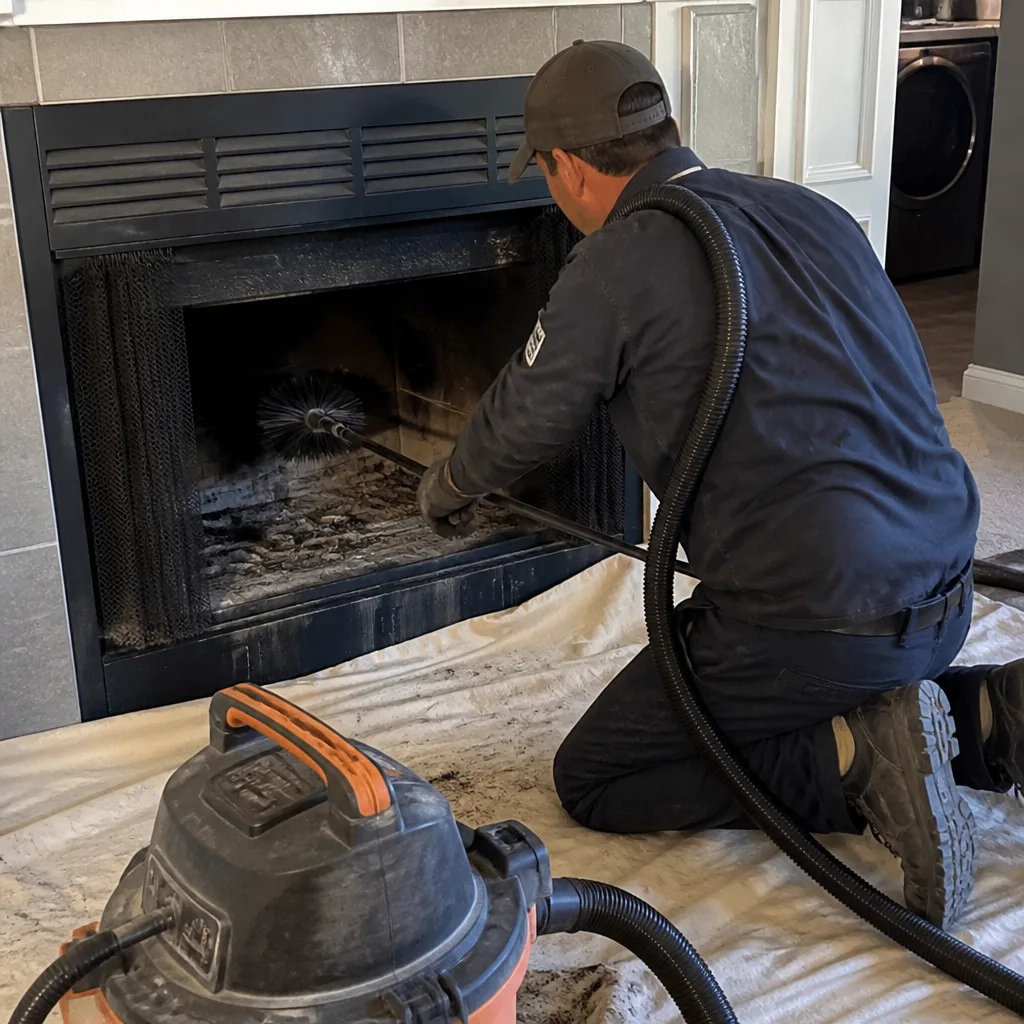
- Floor protection and setup. Canvas drop cloths go down in front of the hearth. The damper area gets sealed to contain dust. A high-powered HEPA-filtered vacuum runs throughout the process, not just at the end.
- Firebox and damper inspection. We check the firebrick for cracks, the damper for smooth operation and seal quality, and the smoke shelf for debris accumulation. This is also where we look for evidence of water entry.
- Mechanical sweeping. A rotary brush system, sized to your specific flue dimensions, spins from the top down or bottom up depending on access. The rotary action does what a flat wire brush cannot: it removes glazed creosote and knocks loose the thin tar deposits that build in even lightly used Norwalk fireplaces.
- Flue inspection with camera. After sweeping, we run a camera up the flue to check for cracks, gaps, spalling, or separation in the liner. This is the step that separates a sweep from a clearance. A flue can look clean and still have structural problems.
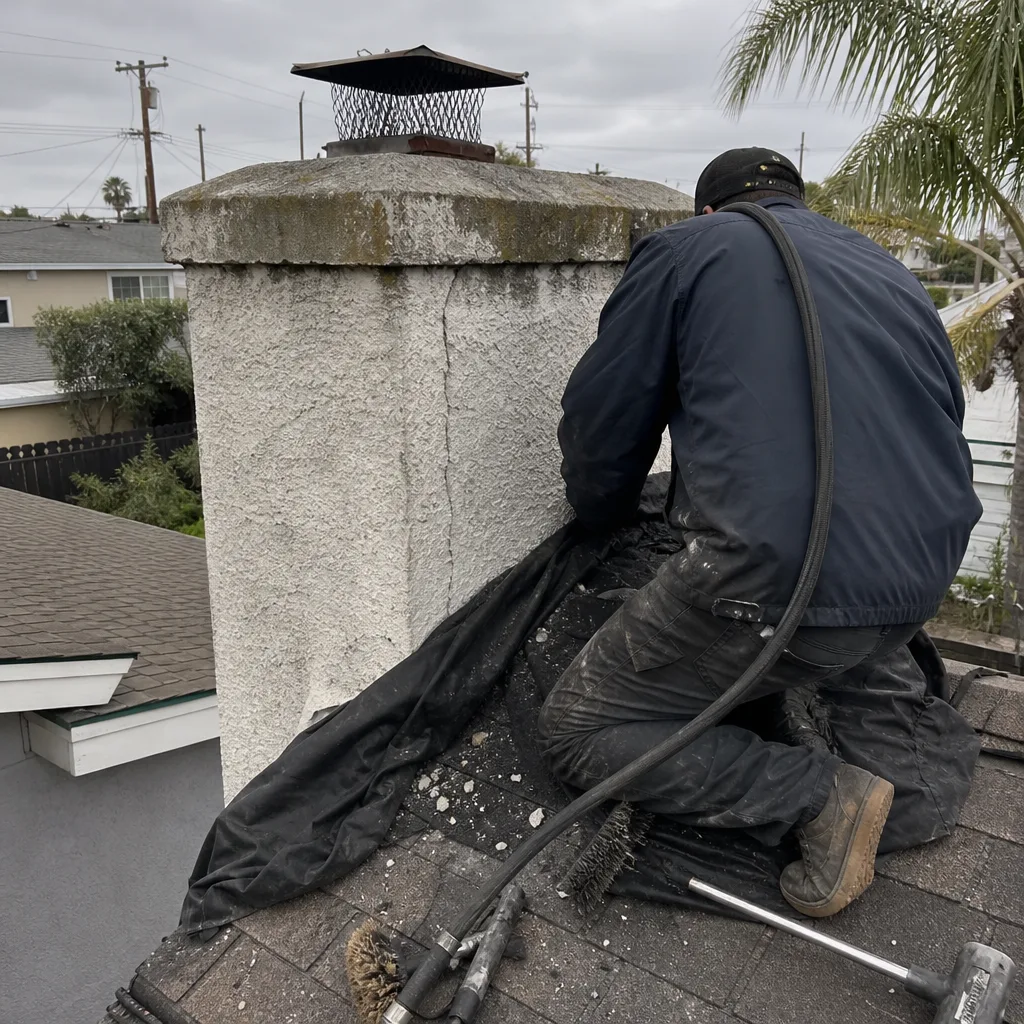
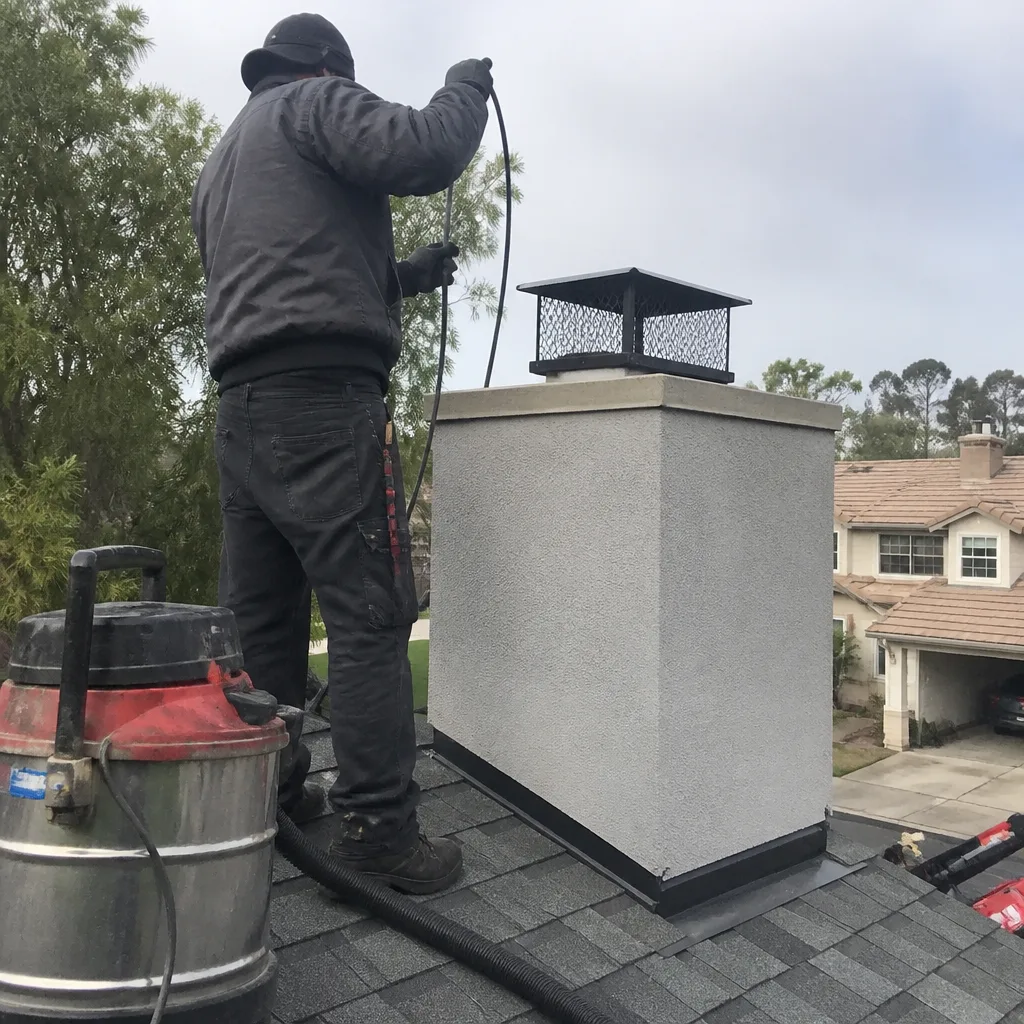
- Cap and crown check. We inspect the chimney cap for rust, the crown for cracks, and the flashing where the chimney meets the roof. In Norwalk, cap and crown deterioration is one of the most common findings because of salt air and UV exposure.
- Report and photos. You get a written report with photos from the camera inspection. If we found nothing wrong, the report says so. If we found a cracked liner or deteriorated mortar, the report shows it.
The entire process takes 45 to 90 minutes for a standard single-flue chimney. A chimney with heavy glazed creosote, a long flue run, or multiple fireplaces takes longer.
Why Low-Use Fireplaces in Norwalk Still Require Annual Inspection
This is the biggest misconception we encounter. Homeowners assume that a fireplace that gets lit six times a year stays clean and safe by default. The logic makes sense on the surface. Less fire means less creosote means less risk. But creosote is only one of the hazards a chimney inspection catches, and in Norwalk it’s often not the most urgent one.
Here’s what accumulates in a Southern California chimney that sits idle for eleven months of the year:
- Bird and rodent nesting. Swallows, starlings, and pigeons build nests in uncapped or damaged chimneys throughout the Los Angeles basin. A single nest can fully block a flue, redirecting carbon monoxide into the living space on the first fire of the season. We remove nests from Norwalk chimneys every fall.
- Debris from wind and trees. Leaves, twigs, and wind-blown debris collect in the smoke shelf even when the damper stays closed. A portion of this debris is combustible.
- Moisture damage from marine air. This is the one most generic guides miss for the 90650 zip code corridor. Coastal humidity penetrates mortar joints year-round, slowly breaking down the cementitious bonds. The damage happens whether or not you ever light a fire.
- Damper seal deterioration. Metal dampers rust and warp. A damper that no longer seals lets conditioned air escape year-round and allows moisture to enter the flue from above.
- Spalling brick and flue tile. Moisture absorption causes brick faces and flue liners to flake, crack, and eventually separate. Left long enough, spalled flue tiles are a fire hazard because they expose combustible framing to heat.
The National Fire Protection Association’s NFPA 211 standard, which is the accepted code reference for chimney maintenance, recommends annual inspection for all chimneys, fireplaces, and vents regardless of usage frequency. Norwalk follows this standard. Our Chimney Sweep in Norwalk service covers exactly this: a full inspection even when the fireplace has barely been used.
The Three NFPA 211 Inspection Levels, Explained Without Jargon
If you’ve ever bought or sold a home in Norwalk, you may have heard the term “Level 2 inspection” without anyone explaining what it means. For The Complete Guide to Chimney Cleaning in Norwalk, here’s the plain-English version of the three levels defined by NFPA 211.
Level 1 Inspection. This is the standard inspection performed during a routine sweep. It covers the readily accessible parts of the chimney: the firebox, damper, smoke chamber, flue interior, cap, and crown. The technician uses a flashlight and basic tools. If the chimney is being used in the same way as before, with the same appliance and fuel type, a Level 1 is appropriate. Most annual Norwalk sweep visits are Level 1.
Level 2 Inspection. This goes further. It includes everything in Level 1 plus an internal camera scan of the flue, an inspection of accessible attic, crawl space, and roof areas, and a check of the clearance to combustibles. A Level 2 inspection is required when a property is sold or transferred, when a new appliance is installed, when the liner is changed, or when an event occurs that could have damaged the chimney – an earthquake, a lightning strike, a chimney fire, or a major storm. In Norwalk home sales, a Level 2 inspection is the standard requirement for real estate transactions.
Level 3 Inspection. This is rare and invasive. It’s indicated when a Level 1 or Level 2 inspection reveals a serious hazard that requires access to concealed areas of the chimney structure. A Level 3 may involve removing drywall, siding, or portions of the chimney itself. Homeowners in Norwalk rarely need a Level 3 unless there is significant structural damage.
For most Norwalk homeowners, the practical takeaway is simple: if you’re having a routine cleaning, Level 1 covers it. If you’re buying or selling, the lender or inspector will require Level 2. Our Chimney Repair in Norwalk team performs both and can tell you which level your situation calls for.
How Marine-Layer Humidity Damages Chimneys in the 90650 Corridor
Norwalk sits far enough inland that most residents don’t think of it as a coastal city. But the marine layer does not respect a clean line on a map. Morning fog and consistent humidity in the mid-60s to mid-70s percentage range push inland through the LA basin most nights from late spring through early fall. That moisture reaches Norwalk chimney systems and it has a compounding effect.
Here’s the mechanism. Masonry is porous. Brick, mortar, and even tile flue liners absorb microscopic amounts of water from humid air. When temperatures rise during the day, that absorbed moisture expands. When they drop at night, it contracts. Over five, ten, twenty years, this thermal cycling weakens the mortar bonds that hold the chimney together. In our experience, we see more spalling brick and cracked crowns in Norwalk chimneys than in drier inland communities at similar price points.
The salt component makes it worse. Norwalk’s proximity to the Pacific means the air carries trace amounts of sea salt. Salt accelerates corrosion of metal components: dampers, caps, chase covers, and any exposed flashing. A galvanized steel cap that lasts fifteen years in Riverside may last eight in Norwalk. The failure mode is usually rust-through, after which rain and birds get direct access to the flue.
What this means practically:
- Annual inspection is not optional. You are not checking only for creosote. You are checking for progressive moisture damage that accumulates silently.
- Cap and crown condition matters more in Norwalk. These are the first line of defense against both rain and marine-layer moisture intrusion.
- Liner deterioration follows a pattern. Hairline cracks from thermal stress widen over time. A camera inspection catches them before they become a fire hazard.
When we find moisture-related liner damage during a sweep, we can often repair it without a full rebuild. We work with DuraFlex flexible liner systems and HeatShield flue resurfacing compound, both professional-grade materials from established chimney supply manufacturers. Not every chimney needs a new liner. But every Norwalk chimney needs to be checked.
What a Sweep Does Differently from a Handyman
A handyman with a brush and a shop vac can remove loose soot. That’s not what a professional chimney sweep does, and the difference matters for safety. See DIY vs Professional Chimney Cleaning: The Norwalk Homeowner’s Decision Guide for the full comparison. Here are the technical distinctions.
Rotary brush systems versus flat brushes. A flat wire brush is a hand tool. It’s pushed or pulled through the flue and removes the loosest, flakiest deposits. A rotary brush system uses a motor to spin brush heads sized to the exact flue dimensions, reaching into corners and breaking the bond of glazed creosote. Most fires are fueled by second-degree glazed creosote, the tar-like deposit that requires mechanical force to remove. A rotary system is the standard for a reason.
Creosote classification knowledge. A professional sweep can identify and categorize creosote into three degrees: first-degree is loose soot, second-degree is granular or flaky, third-degree is a hardened glaze. Each degree requires different removal methods. Third-degree creosote often requires chemical or rotary treatment and signals a burning-conditions problem in the fireplace itself. A handyman sweeping a flue rarely knows what degree they’re looking at.
Camera inspection capability. The most important difference. After cleaning, a professional runs a camera through the flue and photographs the interior. This is how we find cracked liners, separated joints, and spalling that would be invisible from either end. Without a camera, a flue can look clean and still be unsafe. A handyman cannot provide this.
Product and repair knowledge. When a sweep finds a problem, the professional can offer a concrete repair path. A handyman writes a note and tells you to call someone else. That’s a meaningful difference. We sweep, but we also repair using products from Famco, Copperfield, and HeatShield. If we find a cracked flue tile, we don’t hand you a referral slip. We show you the photo, explain the options, and can typically schedule the repair ourselves.
NFPA 211 compliance. A professional sweep in Norwalk works to the NFPA 211 standard and can issue Level 1, Level 2, or Level 3 inspection documentation. Insurance companies and real estate transactions require this. A handyman receipt does not satisfy either.
How to Read a Sweep Report: Safety Findings vs. Cosmetic Items
After a sweep, you should receive a written report. Here’s how to interpret what’s on it, and how to tell the difference between a genuine safety issue and a cosmetic observation. This is where an honest technthisician earns trust, and it’s worth knowing what to look for.
Safety-critical findings. These require action.
- Cracked or separated flue liner. This is the one that matters most. A cracked liner can allow heat, sparks, or carbon monoxide to escape into the wall cavity or living space. It is a fire hazard. If the report shows cracks, deterioration, or separation, do not use the fireplace until it’s addressed.
- Third-degree glazed creosote. A hardened tar glaze that cannot be removed by standard sweeping is a chimney fire waiting for a hot fire. It’s the most combustible form of creosote.
- Blocked flue. Bird nesting, debris, or a collapsed flue tile is a direct carbon monoxide risk. The chimney should not be used.
- Missing or non-functional cap. This is how birds, rain, and debris get in. A missing cap is a precursor to more serious problems.
- Improper clearances to combustibles. If the report says framing or insulation is too close to the flue, this is a code violation and a fire hazard.
Maintenance items. These can usually be scheduled without urgency.
- Light surface rust on the damper. Keep an eye on it. Replace it when it starts to bind or no longer seals.
- Hairline cracks in the crown. Small crown cracks are common in Norwalk due to moisture. They can be sealed, but they’re not an emergency.
- First-degree creosote accumulation. This is normal and was removed during the sweep.
- Faded or worn cap paint. Cosmetic. The cap’s function matters, not its appearance.
- Minor mortar flaking in the firebox. If the firebrick is intact and the flue is sound, minor surface spalling is a watch item.
A good sweep report tells you plainly what can wait and what cannot. We never recommend a repair without camera evidence we can show you on the spot. If you’re told you need a new liner and the technician cannot show you why on camera, get a second opinion. Our Chimney Repair Norwalk home base serves the entire Norwalk area, and every report we write includes photos.
What Chimney Sweeping Costs in Norwalk
Chimney sweeping in Norwalk is priced as a package that includes inspection, cleaning, and a written report. Here are the typical line items you’ll see, with ranges based on what we charge in the 90650 area.
- Standard Level 1 sweep and inspection: $179 to $249. Includes setup, rotary brushing, vacuum, damper and firebox inspection, and a written report. Most single-flue Norwalk homes fall in this range.
- Level 2 inspection with camera scan: $249 to $350. Required for real estate transactions, new appliance installation, or when an event has potentially damaged the chimney. Includes everything in Level 1 plus full camera documentation.
- Heavy creosote removal (third-degree glaze): $100 to $200 additional. Requires specialized rotary heads or chemical treatment and adds time to the job.
- Bird or animal nest removal: $75 to $150 depending on the size and location of the nest. We also check for and advise on cap replacement to prevent re-entry.
- Chimney cap replacement: $150 to $500 including the cap. Exact price depends on flue size and whether a custom fabrication is needed.
- Dryer vent cleaning (recommended companion service): $99 to $159. We offer this because lint accumulation is a leading cause of house fires, and most chimney companies don’t address it at all. More on our Dryer Vent Cleaning in Norwalk page.
These are honest ranges, not bait pricing. A two-story roof at a steep pitch adds a small access fee. A chimney that hasn’t been swept in five or more years may require additional time. Call (855) 942-0212 for an exact quote on your home. Estimates are free, and we’ll tell you over the phone what to expect.
Common Mistakes to Avoid
- Assuming a low-use fireplace doesn’t need inspection. As explained above, moisture, pests, and debris accumulate regardless of how often you burn. A chimney that hasn’t been inspected in five years should be inspected before the next fire, not after.
- Using chemical creosote logs instead of a sweep. Creosote-burning logs can convert some glazed creosote to a flakier form, but they are not a substitute for mechanical cleaning and inspection. They address one narrow problem and tell you nothing about liner condition.
- Letting a handyman “clean” the chimney without a camera. Without a visual record of the flue interior, you have no idea whether the chimney is actually safe. The camera is the point.
- Ignoring a damper that no longer seals. A worn damper is an energy loss year-round and a moisture entry point during winter rains. Replacing it is straightforward and cost-effective.
- Skipping the dryer vent. Dryer lint fires are one of the most preventable types of residential fire, and dryers in Norwalk are used year-round. If you’re bringing in a chimney company anyway, have the dryer vent cleaned at the same time.
- Burning for ambiance on days with poor draft. Some Norwalk winter days have temperature inversions that create weak draft. If smoke doesn’t rise properly, the fire is exposing you to carbon monoxide and particulates. Close the damper and have the flue checked before the next burn.
When to Call a Professional
Schedule a sweep if any of these apply to your Norwalk home: you haven’t had one in over twelve months, you’re buying or selling the property, you’ve heard or seen signs of birds around the chimney, you notice a musty odor near the fireplace after rain, you see white staining on exterior brick, smoke enters the room during a fire, or your last sweep report flagged any item that was never addressed. If you’re unsure whether you need a Level 1 or Level 2 inspection, call and describe the situation. We’ll tell you which applies and what it costs. Chimney Repair Norwalk offers free estimates throughout the Norwalk area. Call (855) 942-0212.
See the difference
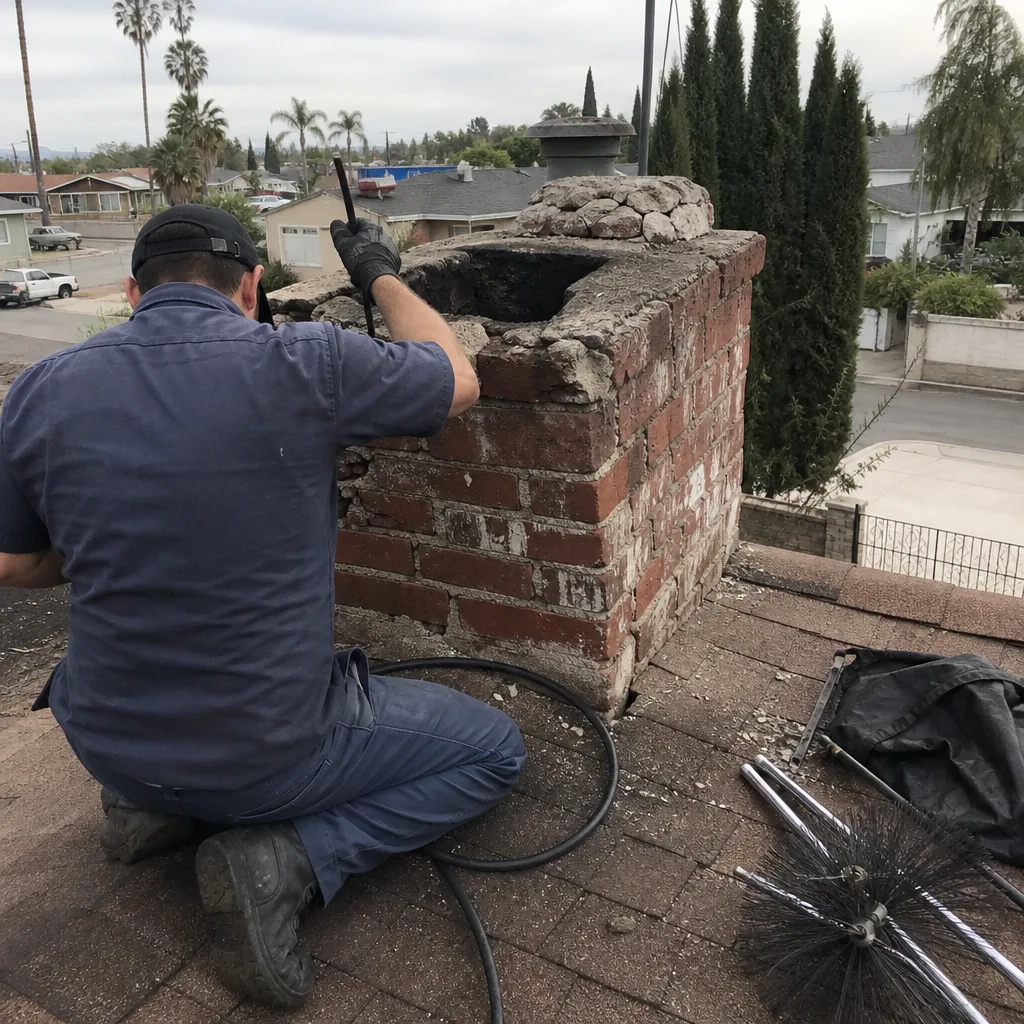 Before
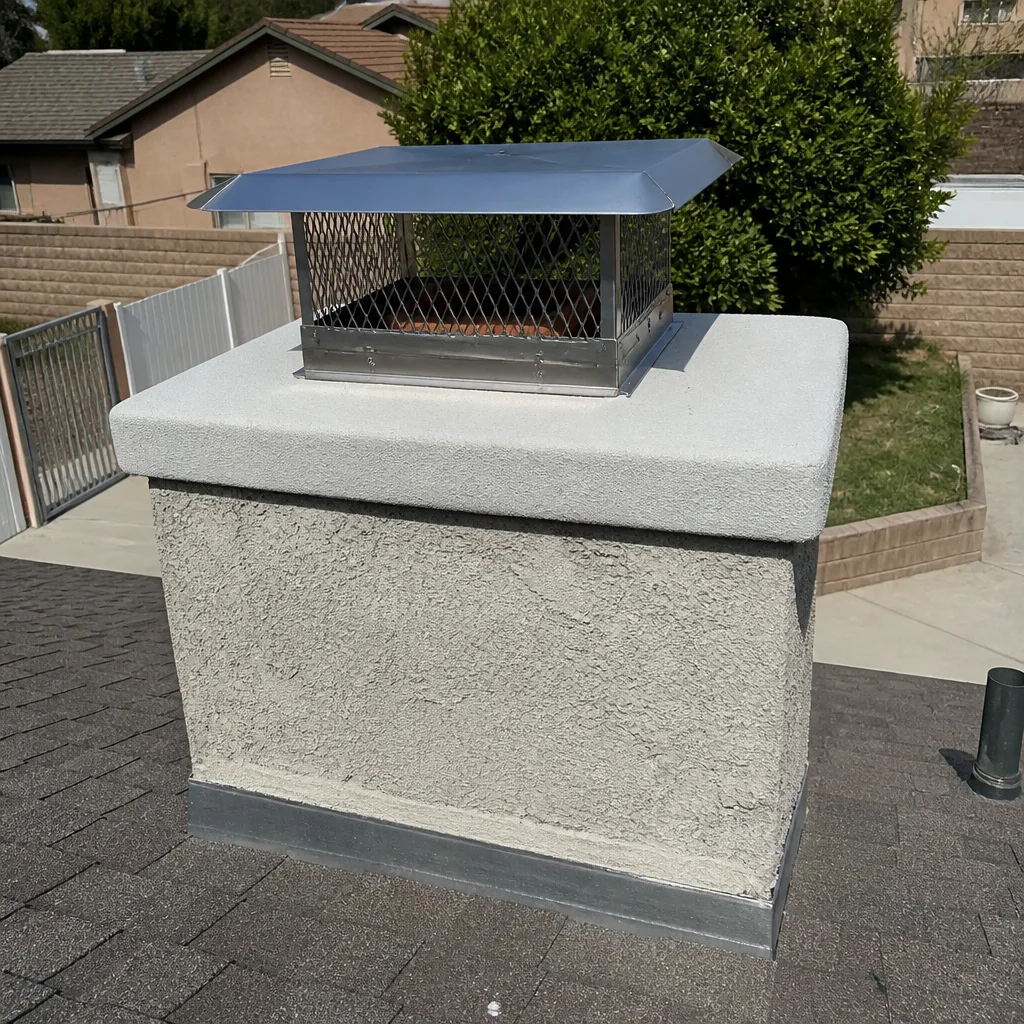 After
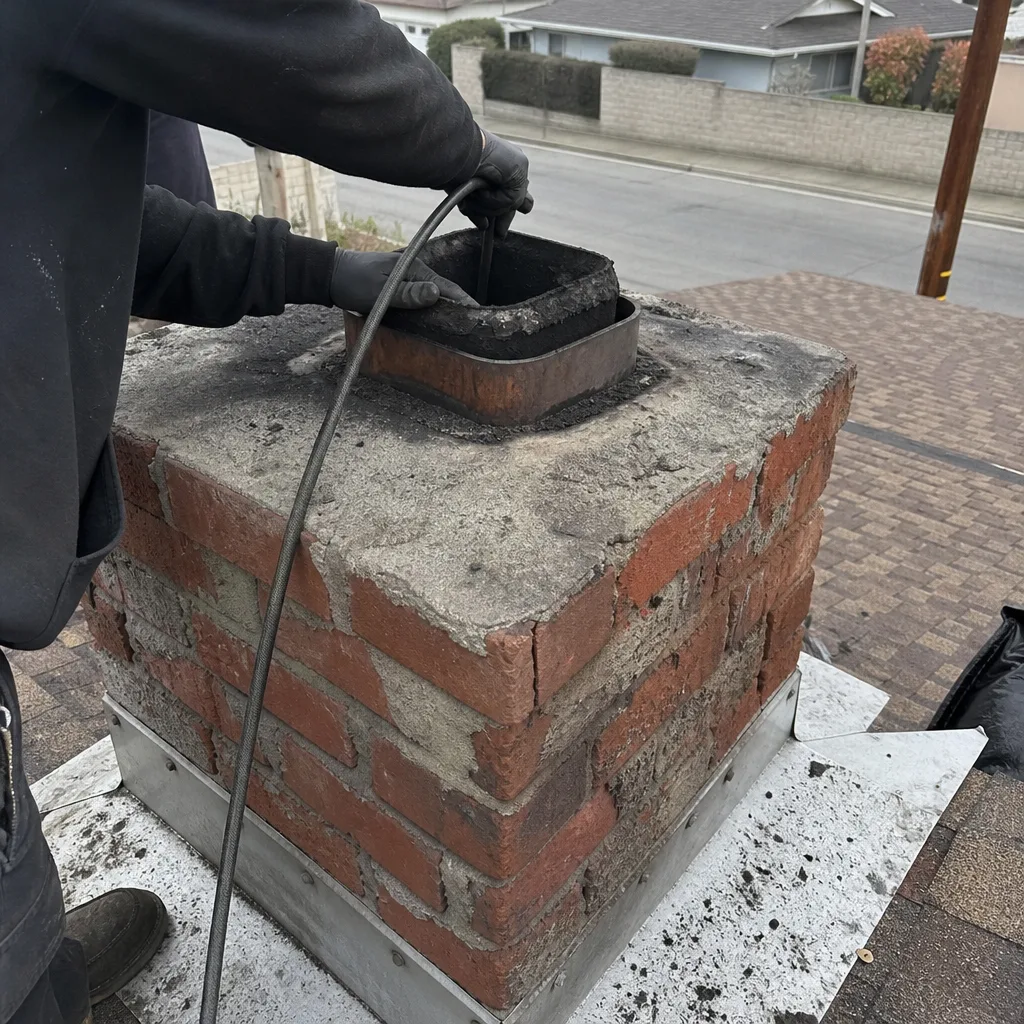 Before
 After
 Before
 After
Frequently Asked Questions
A standard Level 1 chimney sweep and inspection in Norwalk costs $179 to $249, and a Level 2 inspection with camera scan runs $249 to $350. Additional charges apply for heavy creosote removal, nest removal, or cap replacement. Call (855) 942-0212 for an exact quote; estimates are free.
The NFPA 211 standard recommends an annual inspection for all chimneys, regardless of usage frequency. In Norwalk, annual inspection matters even for low-use fireplaces because marine-layer humidity accelerates mortar and liner deterioration year-round.
Yes. A camera inspection is the only way to see the interior of the flue, which is where cracks, separation, and moisture damage develop. Chimneys that sit idle are still exposed to humidity, temperature cycling, and pest intrusion. A clean-looking flue does not mean a safe flue.
You accumulate unknown risk. Creosote may build to hazardous levels, birds may nest in the flue, and mortar deterioration proceeds without detection. When problems are eventually found, they tend to be more expensive to fix. A missed annual inspection is not a shortcut; it’s a deferral.
Some cracked liners can be repaired by resurfacing with HeatShield, a professional flue resurfacing compound. More extensive damage may require a DuraFlex flexible liner system. The repair path depends on what the camera shows, and we can often perform the repair ourselves rather than sending you to a separate contractor.
No, it is a separate service, but we offer both. Lint accumulation is a leading cause of residential fires, and most chimney-only companies do not address it. We include dryer vent cleaning because it’s part of the same household fire-safety picture.
The Bottom Line
A chimney sweep in Norwalk is not a seasonal checkbox. It’s a diagnostic process that catches problems unrelated to how often you burn. Marine-layer humidity eats at mortar and metal components year-round. Birds nest in flues during the months your fireplace sits cold. A camera inspection is the only way to see these issues before they become hazards. Annual inspection is the standard, and when problems are found, the right company can repair them using professional-grade materials like DuraFlex, HeatShield, and Copperfield products. Don’t mistake a clean chimney for a safe one. Schedule your sweep, read the report, and act on what it actually shows. For more guides & resources, explore our blog.
Written by the team at Chimney Repair Norwalk, serving Norwalk since 2017.