
Last updated November 2, 2026
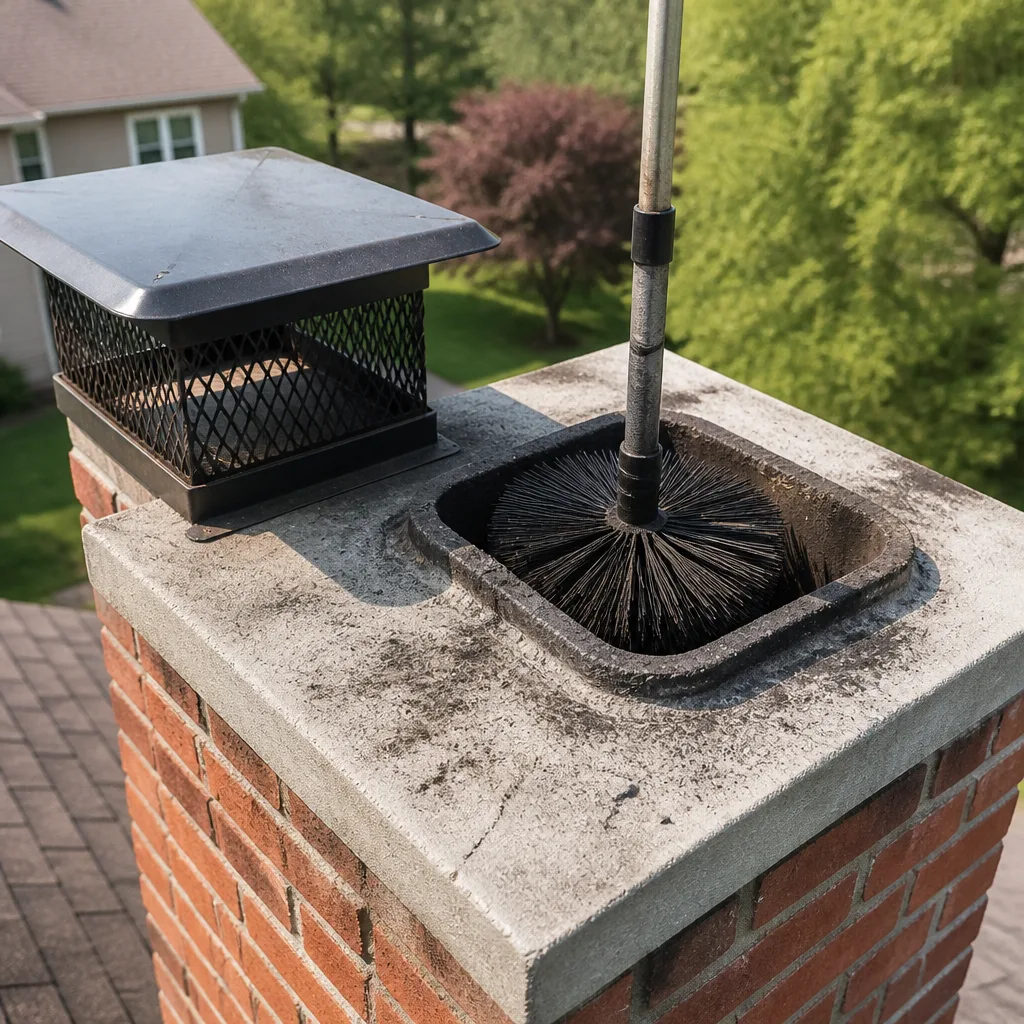 Sweep & inspection
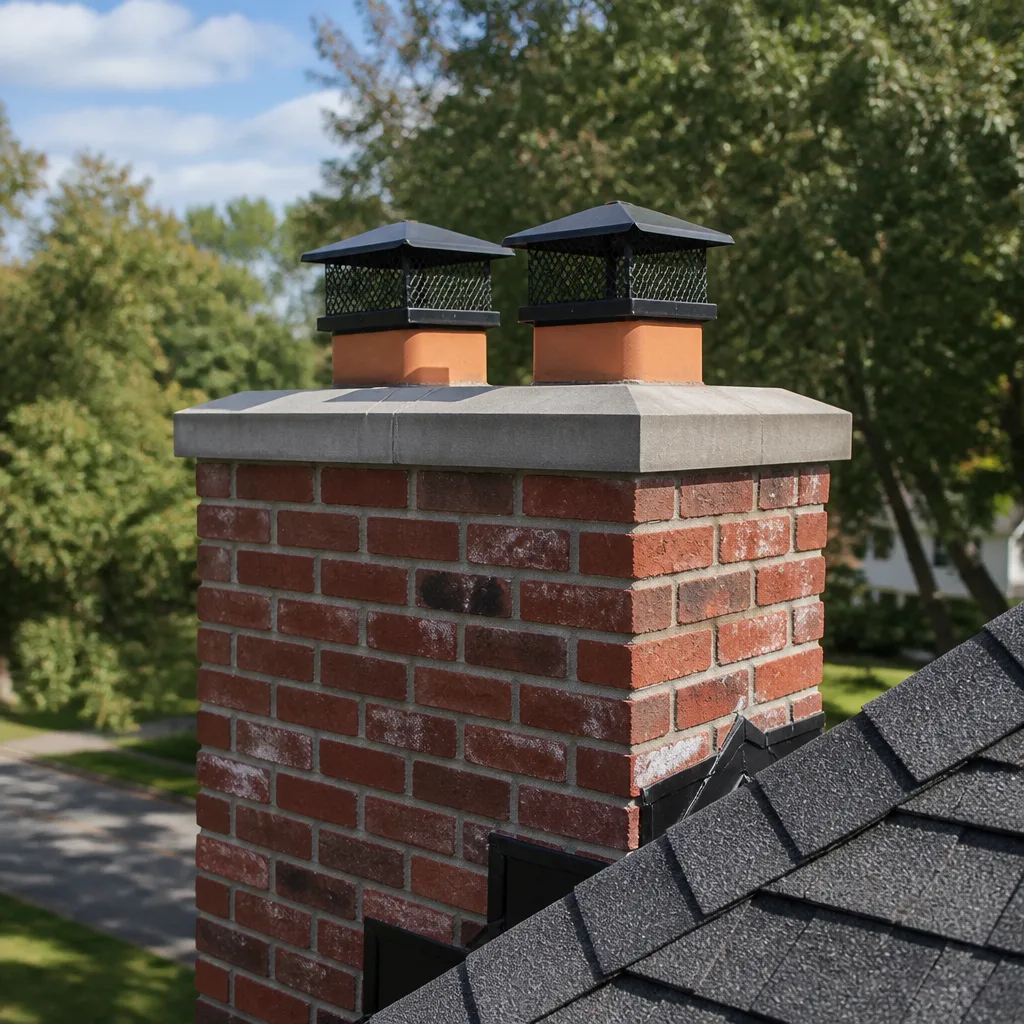 Caps & crowns
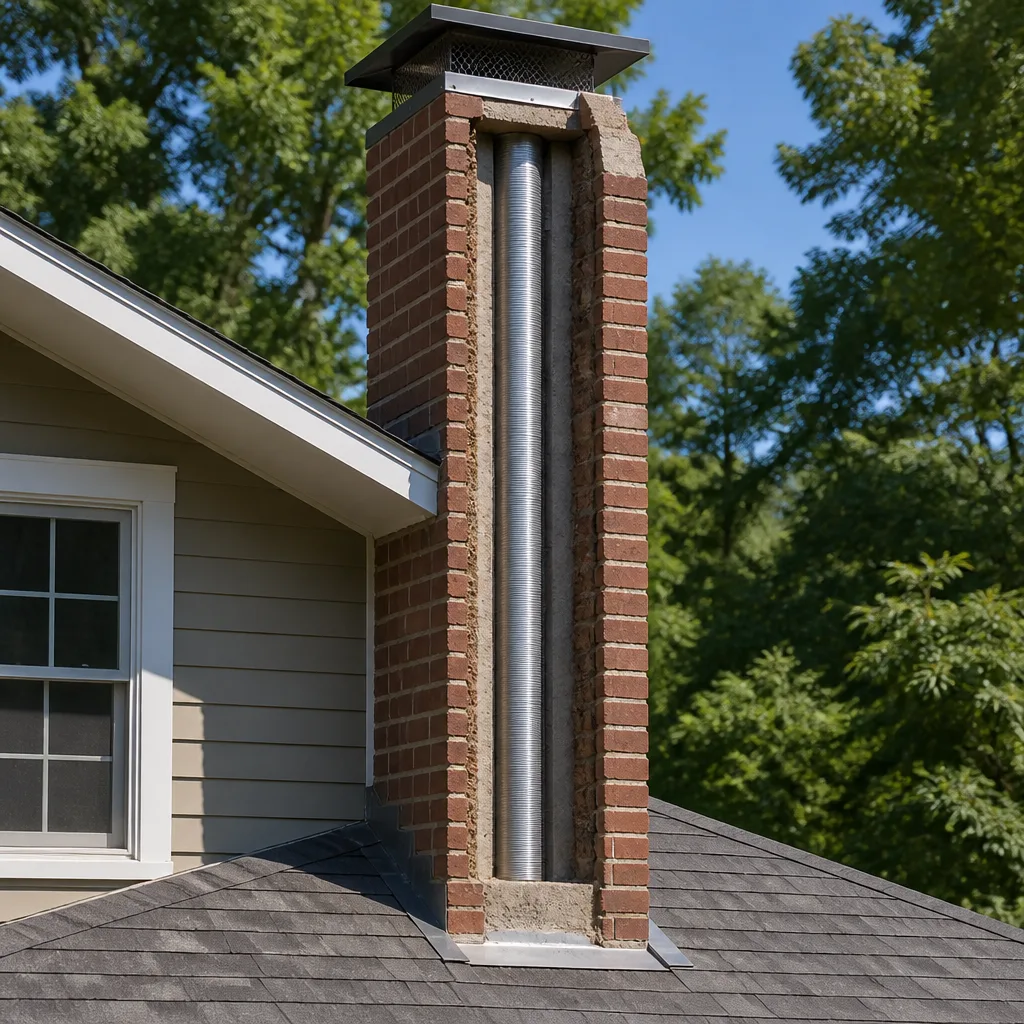 Flue relining
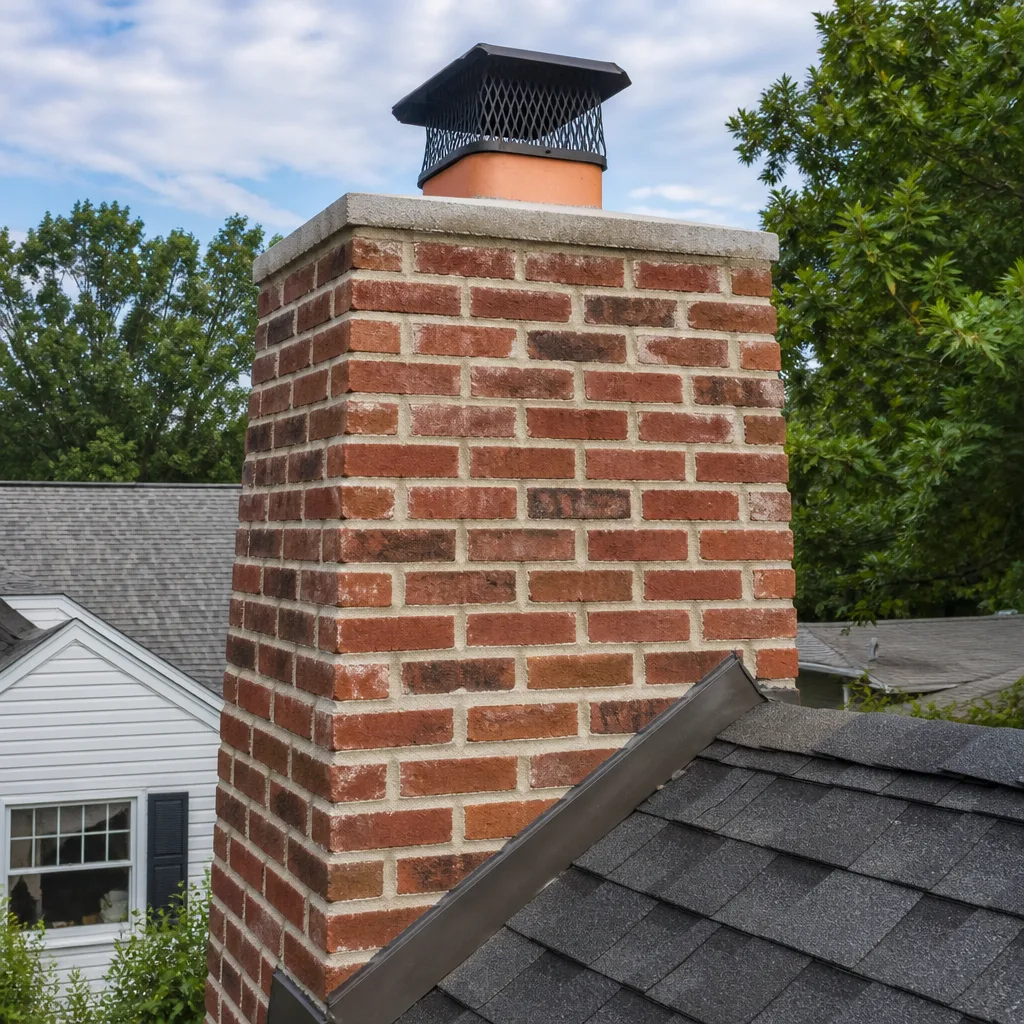 Masonry repair
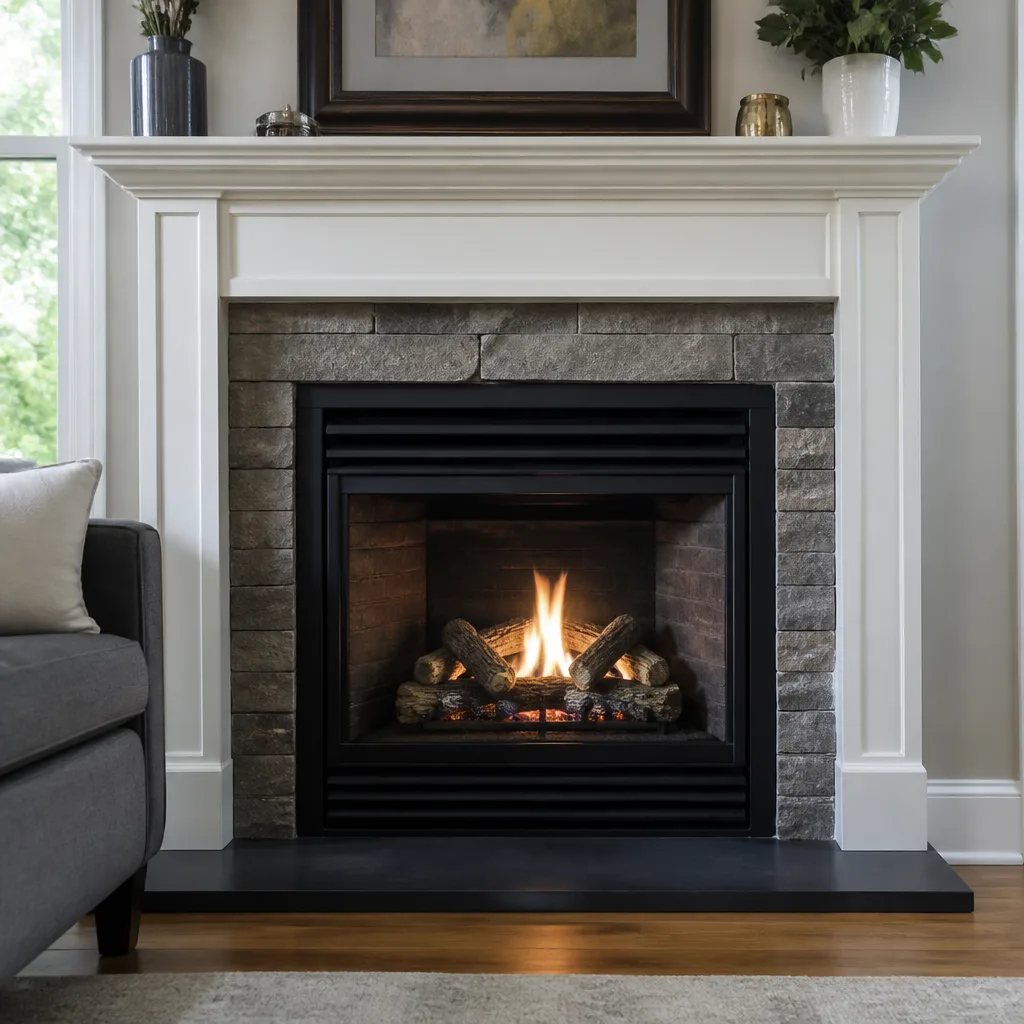 Gas fireplace service
Level 1 sweep and inspection to the NFPA 211 annual standard - flue, crown, cap, and flashing checked and photographed
Chimney sweep logs do not sweep chimneys. They loosen some creosote - which then falls where a brush and vacuum still have to collect it.
DIY vs Professional Chimney Cleaning: The Norwalk Homeowner’s Decision Guide
Here’s a number that catches most Norwalk homeowners off guard: the National Fire Protection Association reports that roughly one in four home heating fires involves a chimney or flue that was not cleaned. What’s more surprising is how many of those chimneys looked clean from the hearth. A homeowner with a hardware-store brush kit can remove visible soot from the firebox floor, but the creosote that actually ignites is usually glazed onto the flue liner 15 feet above, invisible from the ground, and chemically bonded to the masonry or metal surface. This guide walks through what DIY cleaning can legitimately accomplish, what it cannot, and where the real decision gets made for a Norwalk homeowner: not at the store shelf, but in what you’re able to see and verify about your chimney system before you light the first fire of the season. For seasonal chimney cleaning care for Norwalk homeowners, timing and preparation matter as much as the cleaning itself.
Styles & brands we work with
- Sweep & inspection
- Caps & crowns
- Flue relining
- Masonry repair
- Gas fireplace service
Quick Answer
Most Norwalk homeowners are better served by professional chimney cleaning, not because they lack the arm strength to run a brush, but because the safety-critical parts of a chimney inspection require equipment and training that do not come in any DIY kit: video camera inspection of the flue interior, creosote staging identification, smoke shelf clearing, and structural assessment of the liner. DIY cleaning can remove loose surface soot from an already-safe chimney, but it cannot tell you whether the chimney is safe to use. If you’ve had a professional Level 2 inspection within the last 12 months and know your flue is in good shape, light DIY maintenance is reasonable. If you cannot state with certainty when your liner was last inspected by camera, call a pro before you burn.
Table of Contents
- What DIY Chimney Cleaning Can Actually Do
- What DIY Cleaning Cannot Do (And Why It Matters)
- The Equipment Professionals Use That Homeowners Cannot Easily Access
- Understanding Creosote Stages: The Thing DIY Guides Skip
- Five-Year Cost Comparison: DIY vs Professional Cleaning
- The Insurance Reality: What California Policies Look For
- The Legitimate DIY Use Case
- Norwalk-Specific Considerations
- Common Mistakes to Avoid
- When to Call a Professional
- Frequently Asked Questions
- The Bottom Line
What DIY Chimney Cleaning Can Actually Do
Before we sound like the people who sell what we’re comparing against, let’s be straight about what a homeowner with a rotary brush kit, a drop cloth, and a Saturday afternoon can legitimately accomplish. If your chimney is already in good structural condition and you use the fireplace lightly, DIY maintenance is not nonsense. It has a real, narrow role.
Here’s what surface-level DIY cleaning accomplishes:
- Removes loose, flaky soot from the firebox floor and lower flue walls. A mechanical brush does knock down the black powder that builds up from a few dozen fires. That’s real work, and it does reduce fuel available for a chimney fire.
- Confirms obvious blockages near the damper. If a bird nest, a dead squirrel, or a mass of leaves fell into the flue opening and is visible from the firebox, you can see it and clear it with basic tools.
- Maintains a recently inspected, confirmed-clean system between professional visits. This is the legitimate use case we’ll get into more below. If a camera inspection this year confirmed your stainless steel liner is unlined, smooth, and free of Stage 2 or Stage 3 creosote, an annual DIY brushing as light maintenance is defensible.
Here’s the key qualifier: all of that assumes the chimney was already safe to begin with. The brush kit does not produce safety; it preserves it. You are not improving the system. You are not assessing the system. You are removing material from a system that you’ve already independently verified is not deteriorating.
The analogy we use with homeowners when they call is this: you can wash your car in the driveway every weekend, but if the brake lines are corroded, the car is still dangerous to drive, and washing it doesn’t tell you anything about the brakes. Chimney inspection is the brake check. Sweeping is the wash. They are related, but they are not the same thing, and one does not substitute for the other.
What DIY Cleaning Cannot Do (And Why It Matters)
Now the heart of the Norwalk decision. Here’s the list of things a 45-minute weekend brush session cannot accomplish, and it’s this list, not the soot, that determines whether your chimney is safe.
- Assess flue liner integrity. Clay tile liners crack. Stainless steel liners corrode at the bottom from condensation. Masonry joints deteriorate and spall. None of this is visible from the hearth. It requires a camera on a flexible push rod fed up through the flue, recording as it goes. A crack in a clay tile at the 12-foot mark means heat and combustion gases can reach combustible framing. A brush does not find that.
- Identify creosote stage. Creosote exists in three recognized stages: Stage 1 is flaky and brushable. Stage 2 is a glazed, tar-like coating. Stage 3 is a hardened, glaze-like deposit that often requires chemical treatment and professional rotary equipment with chains or aggressive mechanical action to safely remove. A homeowner seeing black buildup cannot distinguish Stage 1 from Stage 2. Stage 2 creosote is a fuel source that can sustain a chimney fire, and brushing over it often just polishes the surface.
- Clear the smoke shelf properly. The smoke shelf, the ledge just above the firebox and just below the flue, is an architectural feature designed to collect debris and creosote falling down the flue. It’s also the place most DIY efforts miss entirely, because it’s positioned above the damper and out of direct line of sight. Debris accumulated there restricts draft and can be a fire hazard.
- Remove Stage 3 glazed creosote. This requires chemical deglazers like Anti-Creo-Soot followed by aggressive mechanical action from a rotary power brush. No homeowner brush kit sold at a hardware store has the torque, the right head geometry, or the chemical-first protocol to deal with this safely. Attempting to chip at glazed creosote with improvised tools risks damaging the liner behind it.
- Document anything. If a fire happens, and we’ll get to insurance below, a professional company provides a dated inspection report and often video images showing the condition of the flue before and after cleaning. That is a written record. “I swept it myself in October” is not a written record, and insurance adjusters know the difference.
We say this without drama: a chimney that is clean is not the same as a chimney that is safe. One is about appearance. The other is about whether the system can contain fire and exhaust gases under repeated thermal stress.
The Equipment Professionals Use That Homeowners Cannot Easily Access
There’s an assumption that professional chimney sweeping is just a longer brush and a stronger pair of arms. It isn’t. The equipment gap has grown significantly in the last decade, and it’s part of why the DIY question has a different answer now than it did when every chimney was an open masonry flue with predictable geometry.
Equipment we run on typical Norwalk jobs that you won’t find at a hardware store:
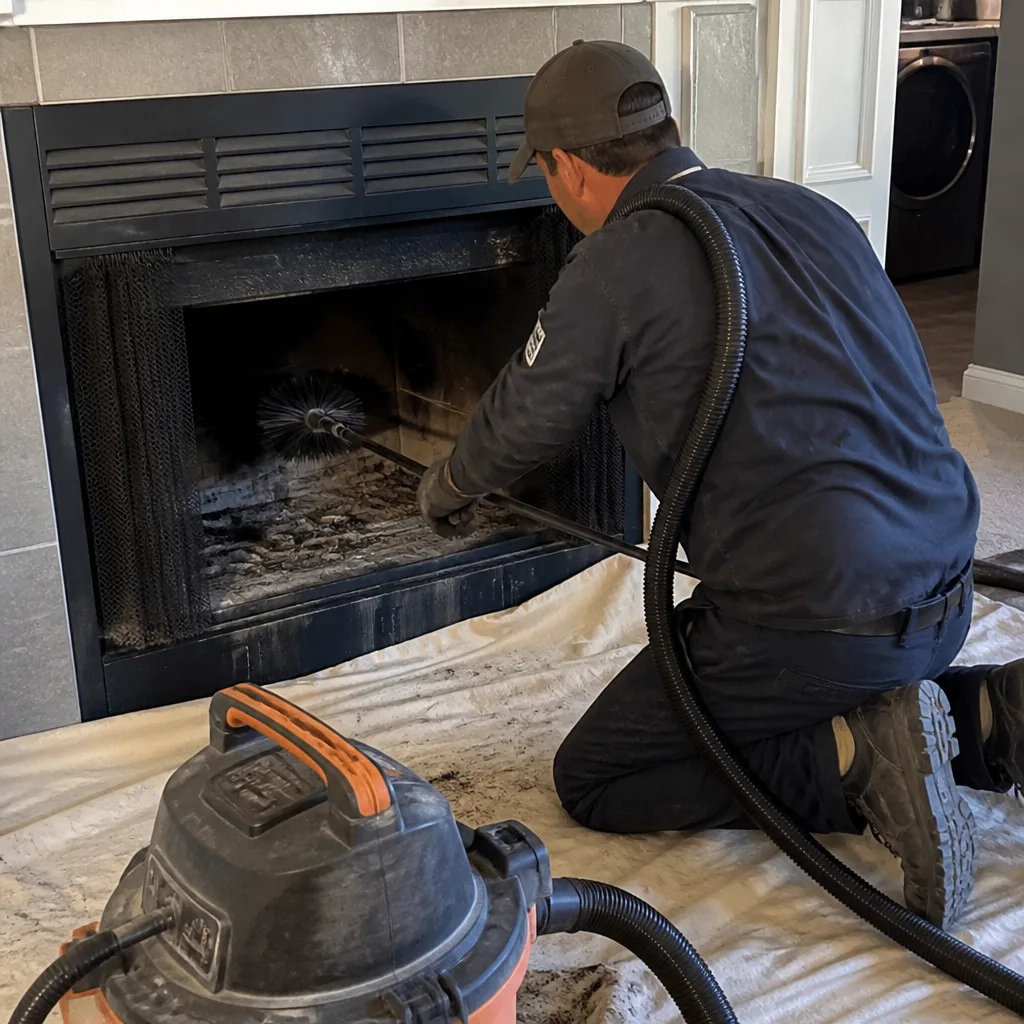
- HEPA negative-pressure systems. A high-powered vacuum creates negative pressure inside the firebox so that dust, soot, and creosote particles are pulled into a sealed HEPA filtration unit rather than blown into your living room. DIY cleaning without negative pressure means the contents of your flue become airborne in your house. Homeowners consistently underestimate this. The dust that comes out of a chimney is not household dust; it’s fine particulates with creosote residue.
- Video inspection cameras. A sealed, waterproof camera head on a semi-rigid push cable, lit and recording. The footage shows the interior of the flue from firebox to cap. This is how you actually know if the liner is cracked, if the mortar joints are failing, if there’s a partial blockage, if a previous repair was done incorrectly. We record and provide this. No homeowner in Norwalk is spending $1,800 on a proper flue camera for a once-a-year look.
- Rotary power brush systems. Powered by a drill motor that a trained operator controls, these use poly or metal cable whip heads to aggressively clean flue walls, particularly effective on Stage 2 creosote. The speed and torque are adjustable, and you need to know what the liner material is and what head is appropriate. Run a metal whip head inside a stainless liner with too much aggression, and you’ve damaged the liner.
- Chemical deglazers and stage-specific treatments. Products like Anti-Creo-Soot, PCR (poultice creosote remover), and specialized glaze-softening agents. These are applied first, allowed to dwell, and then mechanically removed. This is stage-specific chemistry, not a generic “chimney cleaning spray.”
- Professional repair materials. When we clean and find a deteriorated flue, we can address it with materials from established chimney supply manufacturers: HeatShield resurfacing compound for deteriorated masonry flues, DuraFlex stainless flexible liner systems for relining, and products from Gelco, Olympia Chimney, and Copperfield for caps, dampers, and chase accessories. These are not materials you can purchase at retail, and proper application requires training and specific tooling.
The point here isn’t “look at our toys.” It’s that the tasks that determine safety require tools that exist on the other side of the retail market, and no amount of YouTube diligence changes that. A homeowner with a $40 brush kit and a clear Saturday is not doing the same job with worse efficiency. They are doing a different, narrower job entirely.
Understanding Creosote Stages: The Thing DIY Guides Skip
Almost every hardware-store chimney cleaning kit includes a brush, some drop cloths, maybe a rod, and a cheerful label suggesting you’ll have the job done in an hour. What none of them include is the ability to tell what kind of creosote you’re looking at, and that’s the single most important diagnostic distinction in chimney safety.
Creosote forms as a byproduct of incomplete wood combustion. Water vapor, unburned wood gases, and particles rise, condense, and deposit on the comparatively cooler flue walls. How it deposits depends on flue temperature, wood moisture, and how hot you’re burning. The result falls into three recognized stages:
- Stage 1 creosote: Fine, sooty, flaky. Black and dusty. Readily removed with a standard brush. This is what most people picture when they think “chimney cleaning.”
- Stage 2 creosote: Shiny, tar-like, glaze on the surface. It has a distinct crusted or “candied” appearance. This forms when flue temperatures are lower, and it does not brush off. It has to be chemically softened and mechanically worked. It is also highly combustible.
- Stage 3 creosote: Hard, dense, glossy, like a porcelain glaze fused to the flue wall. This is concentrated fuel. It can only be removed with aggressive professional methods, and in severe cases, the liner may need replacement rather than cleaning.
Here’s the Norwalk climate angle. We get cool, damp coastal mornings and relatively short, low-intensity burning seasons compared to mountain climates. People burn smaller, cooler fires on weekends. Cooler fires mean lower flue temperatures, and lower flue temperatures mean more condensation. More condensation means more Stage 2 formation. It’s counterintuitive, but a wood-burning fireplace used for occasional ambiance, rather than a wood stove pushed hard all winter, is disproportionately likely to build glazed creosote.
A rotary cleaning system from a hardware store will remove loose soot, but Stage 2 glazed creosote requires a chemical treatment like Anti-Creo-Soot before mechanical removal, and most homeowners have no way to identify which type they’re dealing with. That’s the opening hook of this guide, and it deserves to be repeated because it’s where the time and money actually gets wasted. Homeowners spend a Saturday running a brush through a flue that’s coated in Stage 2 glaze, sweep up a satisfying pile of black dust from the firebox floor, and believe the chimney is now clean. It isn’t. The glaze is still there. The fuel is still there. The risk is still there.
Five-Year Cost Comparison: DIY vs Professional Cleaning
Let’s talk raw numbers, because the DIY decision always comes down to money in the end. Here’s a realistic five-year comparison for a single-flue, wood-burning fireplace in Norwalk, assuming the chimney starts in sound condition.
The DIY path over five years:
- Rotary brush kit with rods: $60 – $120 one-time, but if you buy the cheap one, expect to replace the brush head every year: add $20 – $30 annually.
- Drop cloths, safety glasses, N95 or better respirator upgrade, shop vac filter bags rated for fine dust: $40 – $80 one-time.
- Chemical treatment (if you actually identify Stage 2 and use a retail-available product): $25 – $40 per year.
- Total five-year outlay: roughly $250 – $420.
The professional path over five years:
- Annual Level 1 chimney sweep with visual inspection: typically $180 – $320 per year in Norwalk, depending on chimney height, roof access, and whether it’s masonry or prefab. Five-year total: roughly $900 – $1,600.
On paper, DIY looks like the obviously better deal. But that comparison ignores the thing we’ve been building toward for the entire guide: deferred inspection discoveries. Here’s what actually happens over a five-year window in Norwalk homes, based on what we encounter when we first see a chimney that’s been DIY-maintained for years:
- A cracked clay tile liner that went undetected for three seasons. By the time we see it, heat has been reaching the chase framing, and the repair is a full reline with a stainless system rather than a localized patch. Cost: $4,000 – $8,000.
- Stage 3 glazed creosote that hardened over multiple seasons of brushing-without-chemistry. Removal becomes a multi-hour aggressive mechanical job, or in worst cases, the liner is too far gone. Cost: $500 – $1,200 for the cleaning, potentially more if liner replacement is required.
- A failed crown or missing chimney cap allowing water into the flue. The homeowner had no idea because water penetration doesn’t show in the firebox until it’s advanced. Repointing masonry, crown rebuild, and cap replacement: $1,500 – $4,000.
- A blocked flue from a bird nest built in the flex elbow of the cap. The fireplace starts smoking back into the house in November. Emergency access plus removal: $200 – $400.
One of these in a five-year window erases the entire savings of the DIY path ten times over. And that’s before you factor in the insurance reality below.
The Insurance Reality: What California Policies Look For
This is the section most DIY guides skip entirely, and in Norwalk, it matters more than in most places because of the density of older housing stock and the presence of a major nearby wildfire risk each September and October.
California homeowners insurance policies generally do not require annual professional chimney cleaning as a condition of coverage. They do, however, process chimney-related fire claims with an adjuster’s eye toward maintenance history. Here’s what that means in practice:
- If a chimney fire starts and the homeowner can produce a dated professional inspection and cleaning report from within the last 12 – 18 months, the claim is generally processed as an accident.
- If the homeowner says they cleaned the chimney themselves, the adjuster will ask for documentation. If the answer is “I didn’t take photos” or “I clean it every year myself,” the carrier may contest the claim on grounds of inadequate or unprovable maintenance.
- If the fire originates in a flue that was last professionally inspected three or more seasons prior, the claim gets more scrutiny. Older homes in the Norwalk area with original clay tile liners from the 1950s and 1960s are especially vulnerable to this because the carrier’s inspector may conclude the liner was already compromised before the fire.
The key distinction: insurance carriers don’t demand professional cleaning, but they reward documentary evidence of due care, and they scrutinize its absence when something goes wrong. A $25 brush kit doesn’t create the paper trail. A $250 professional sweep does.
Industry-established guidance from the Chimney Safety Institute of America and the NFPA is to have chimneys inspected at least once annually and cleaned as needed. “As needed” is where the judgment call lives, but it’s a call a trained eye makes.
The Legitimate DIY Use Case
We are not telling you that buying a brush kit is always wrong. There is one situation where it is genuinely reasonable, and here it is, stated precisely:
You have a fireplace that burns fewer than one face cord of wood per season, meaning occasional weekend fires, not daily heating. You had a professional Level 2 inspection within the last 12 months that confirmed via video camera that your flue liner is intact, your creosote level is Stage 1 or lower, and there are no blockages or structural issues. You know what type of liner you have. You burn seasoned hardwood with moisture content below 20 percent. In that situation, an annual DIY brushing with a rotary system, followed by a vacuum-out and a visual check of the damper, is a reasonable way to stretch the interval between professional inspections to 18 months or so.
The key is knowing that a “Level 2” inspection means a camera survey, not a glance up the flue with a flashlight. Norwalk homeowners often assume the technician who spent five minutes, swept the firebox, and handed over a receipt did an “inspection.” A receipt for a sweep is not an inspection report. If you can’t produce a detailed report describing liner condition, creosote stage, and recommendations, you haven’t had the inspection you’re counting on.
Even in that legitimate case, we recommend pricing out a professional visit before you commit to the kit. If the difference is $200 a year and the professional visit comes with the documentation we described in the insurance section, the brush kit is not saving you as much as the box suggests.
Norwalk-Specific Considerations
Norwalk sits just far enough inland from the coast to get real fall and winter temperature swings without the heavy marine layer blanket that keeps nearby cities in the 60s all winter. Homeowners here tend to burn seasonally, from Thanksgiving through February, with a handful of fires in March and April during late cold snaps. That seasonal pattern, rather than continuous daily burning, shapes the creosote problem we described above.
Some practical specifics for Norwalk homeowners:
- Roof access matters. A meaningful share of the single-family homes in Norwalk are single-story ranch layouts with relatively shallow roof pitches, which makes access straightforward. But many have tile roofs originally installed in the 1960s and 1970s, and walking those tiles to reach a chimney is a skill. Broken roof tiles from a misstep are a common, expensive outcome of weekend chimney projects.
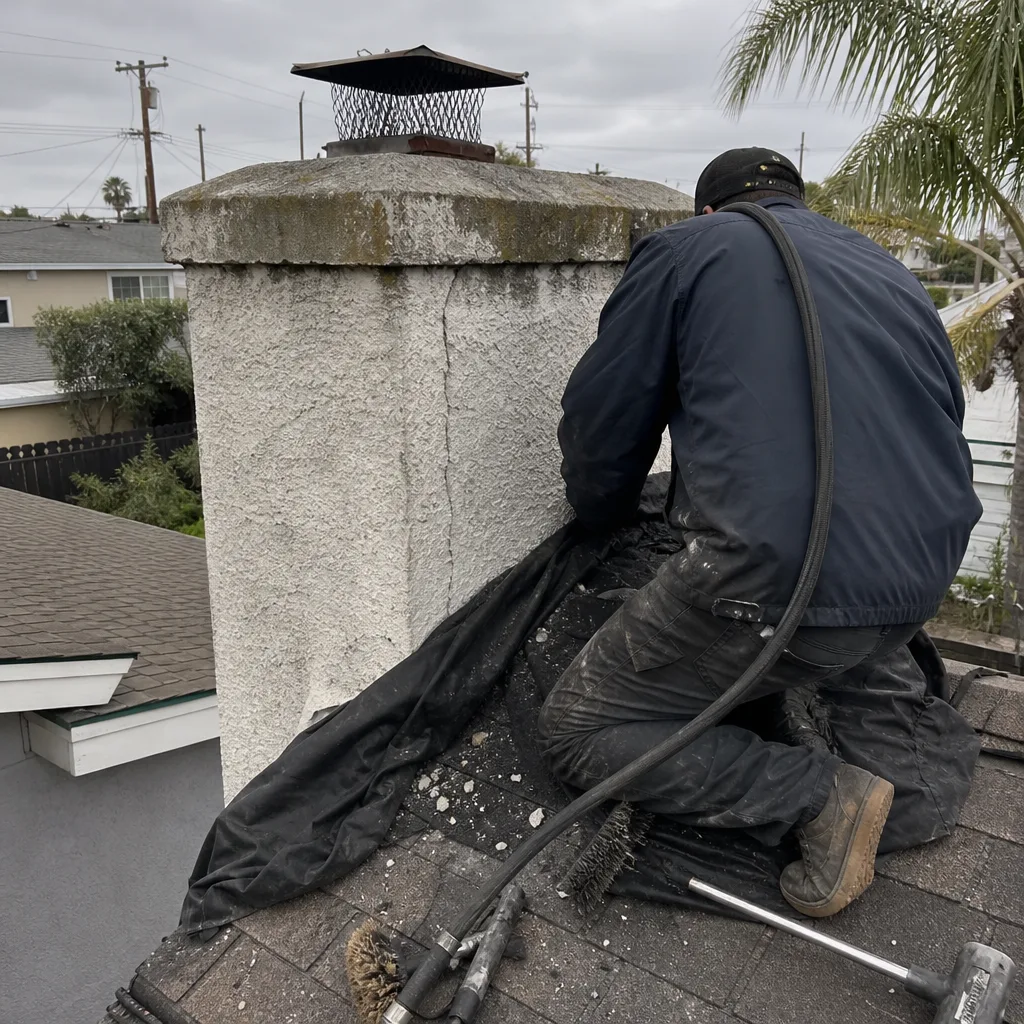
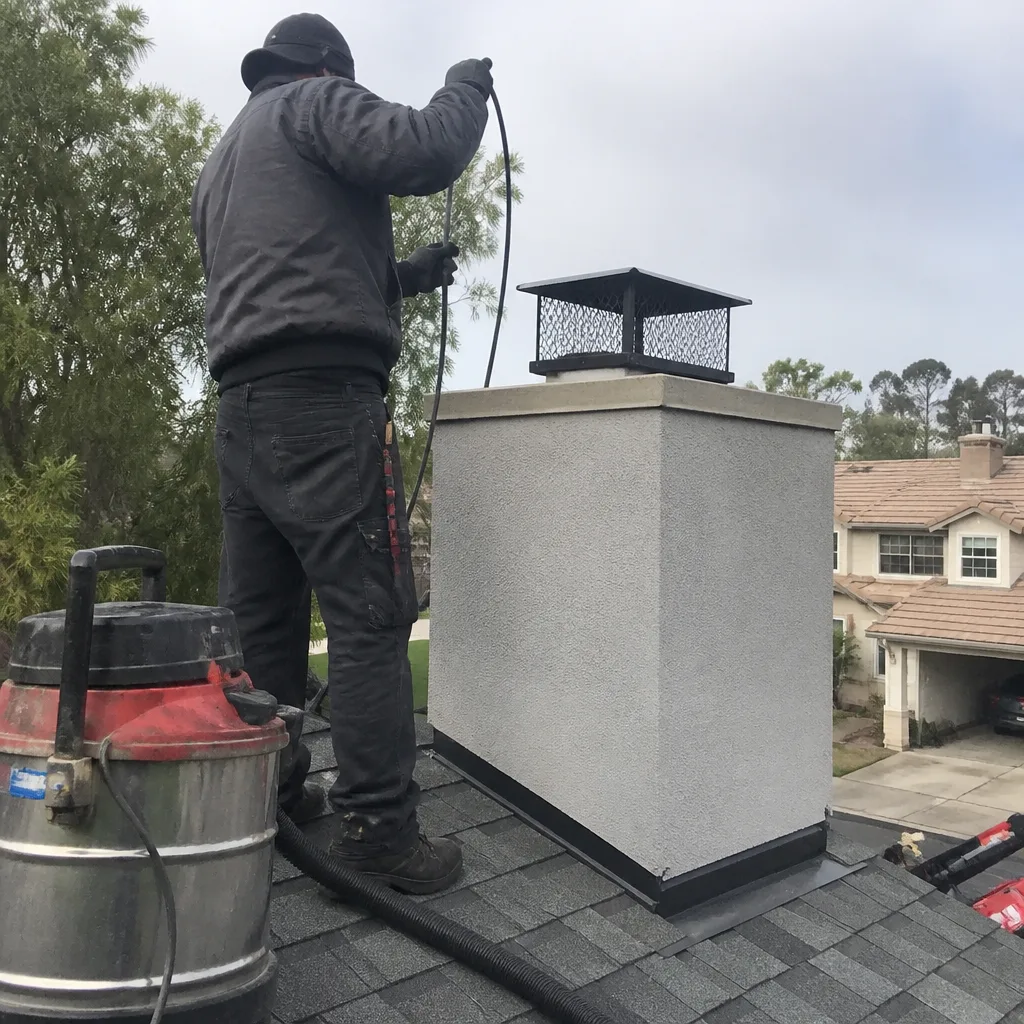
- Chimney caps get hammered here. The Santa Ana winds in September and October carry fine debris, and birds are aggressive about nesting in uncapped flues in the spring. A missing or damaged cap is the single most common non-creosote issue we find in Norwalk chimneys.
- Prefab and factory-built systems are common. Many Norwalk homes built in the 1970s and after have factory-built, metal-chimney fireplaces rather than full masonry chimneys. Those systems are not designed for aggressive DIY mechanical cleaning. Using the wrong brush head or too much force can dent or dislodge the inner liner, at which point the chimney fails and cannot be repaired, only replaced. If your fireplace is a ZC (zero-clearance) factory unit, professional cleaning is the right call almost by default.
- Seasonal urgency here is about the first cold snap. The scramble to get chimneys cleaned happens every year in late October and early November when the first 45-degree night arrives. Booking in September gets you ahead of that rush and well before burning season.
A few more from the field: Homes in the older pockets near the civic center and along Firestone Boulevard disproportionately have original clay tile liners, many of which are now 60-plus years old and are at or beyond their service life. Homes in the newer developments to the southeast are more likely to have prefab systems. Neither type is DIY-friendly in the way a simple open masonry flue might be.
Common Mistakes to Avoid
- Assuming “no soot” means “no creosote.” A firebox can look relatively clean while Stage 2 glazed creosote sits up on the flue walls where you can’t see it. Soot and creosote are different materials, and visibility is not a diagnostic tool.
- Running a wire brush inside a stainless steel liner. Metal brush heads on metal liners cause scratches and galvanic concerns. Only poly or appropriate rotary heads should be used inside stainless systems. If you don’t know what your liner is made of, you shouldn’t be brushing it.
- Cleaning from the roof without proper anchoring and footwear. Tile roofs in Norwalk are brittle after decades of sun. A fall from a one-story roof is less likely to kill you than one from a two-story, but it is still a fast trip to an ER with a broken wrist, and a broken roof tile costs more to replace than the entire professional cleaning.
- Using chemical creosote logs as a substitute for cleaning. Creosote-sweeping logs can loosen Stage 1 deposits but do not remove them; the material still has to be mechanically cleared. They do nothing to Stage 2 or Stage 3. They are a maintenance aid, not a remediation.
- Ignoring the smoke shelf. We mentioned it above, but it bears repeating: the smoke shelf is the single most commonly missed area in DIY cleaning, and debris piled there can restrict draft, increase smoke rollout, and provide additional fuel.
- Not having the dryer vent checked in the same season. Dryer vents and chimney flues fail for the same underlying reason: lint or creosote accumulates, airflow drops, temperatures rise, and ignition follows. A house where the chimney is spotless but the dryer vent is packed with three years of lint is not actually a fire-safe house. We run Dryer Vent Cleaning in Norwalk as a core service because the fire-safety logic is identical.
- Counting on the previous owner’s maintenance history. Most Norwalk homes change hands with no chimney inspection record from the seller. “The house was built in 1965, so the chimney was probably cleaned sometime” is not a safety plan.
When to Call a Professional
Call a professional if you have not had a video-based Level 2 inspection within the last 12 months. Call if you see any shiny, glazed, tar-like black coating when you shine a bright flashlight up the flue. Call if you smell a strong acrid odor from the fireplace during humid weather. Call if the fireplace is a factory-built prefab unit. Call if you’ve had a chimney fire in the past, even a small one that burned itself out. Call if you’re unsure what kind of liner you have. Call if you plan to sell the home within a few years and want the documentary trail. Chimney Sweep in Norwalk is available for free estimates – call (855) 942-0212.
Frequently Asked Questions
A standard chimney sweep and Level 1 inspection in Norwalk typically runs between $180 and $320 for a single-flue, wood-burning fireplace, with the price varying based on chimney height, roof access, and whether the system is masonry or prefab. Additional services like chemical creosote treatment or dryer vent cleaning are quoted separately. The exact quote depends on your specific setup, and most companies offer free estimates. Call (855) 942-0212 for an exact quote – estimates are free.
The NFPA and CSIA recommend an annual inspection for every chimney, with cleaning performed when accumulated soot and creosote reach a level that creates risk. For seasonal, weekend-burning fireplaces common in Norwalk, that usually means a professional sweep every 12 to 18 months, with more frequent cleaning if you burn daily, burn unseasoned wood, or have a history of Stage 2 creosote formation.
Wood-burning inserts vent through stainless steel liners, and those liners are not designed for aggressive DIY mechanical action using hardware-store brush kits. The clearances inside an insert liner are tight, the geometry can include bends, and the liner itself is vulnerable to damage from the wrong brush head. Inserts are also full of hidden collection points – behind the firebox, at the connection collar, around the baffle – that require disassembly. This is professional territory. If you own an insert and want technical depth from a company that works with professional relining products like DuraFlex, call (855) 942-0212.
Creosote builds in stages, starting flaky and progressing to glazed, and the flue diameter shrinks as it accumulates. Draft weakens, smoke rolls back into the room more easily, and the combustible fuel load inside the chimney grows. Simultaneously, undiagnosed conditions like a cracked liner or missing cap continue degrading without notice. At some point, either a chimney fire occurs or the deterioration becomes expensive to reverse. The built-up creosote burns at over 2,000 degrees Fahrenheit, and the structure around the flue is not designed for that. We repair what we find, and what we often find in long-skipped chimneys is a reline job that could have been a $250 sweep two years prior. Call (855) 942-0212 to get eyes on your flue before burning season.
The only way to definitively answer that is with a video camera inspection of the flue interior. A cracked clay tile liner, a separated masonry joint, or a warped and corroded stainless liner will show up on camera footage long before it presents as a visible problem at the firebox. Signs that suggest a liner problem is developing include flaking clay tile fragments in the firebox after fires, a musty or acrid smell emanating from the fireplace in summer, visible smoke stains on the exterior face of the chimney, or deteriorating mortar joints in the smoke chamber. Chimney Repair in Norwalk includes camera inspection with the repair assessment, and we can apply HeatShield resurfacing or install a DuraFlex stainless liner in the same visit if that’s what the footage shows. Call (855) 942-0212 for an inspection.
Yes, and for a blunt reason: dryer vent fires are more common than chimney fires in the United States. Lint accumulation inside the vent restricts airflow, the dryer runs hotter to compensate, and the lint itself is exceptionally flammable. A chimney company that also offers dryer vent cleaning as a core service – rather than a tacked-on upsell – is addressing the same underlying failure mode with the same equipment: camera inspection, mechanical cleaning, documentation. One call covers your chimney and your dryer vent. Chimney Repair Norwalk home service details are available here, and estimates for both services are free at (855) 942-0212.
The Bottom Line
The DIY chimney cleaning question is not about whether you’re capable with a brush. It’s about whether you’re able to see and verify the things that determine safety, and the honest answer is that a homeowner with a hardware-store kit can remove loose soot from a clean flue but cannot assess liner integrity, identify creosote stage, clear the smoke shelf properly, or document any of it in a form an insurance adjuster will respect. The legitimate DIY use case exists, but it’s narrow: light-use fireplace, recent camera-confirmed inspection, Stage 1 creosote only, known liner type. For everyone else in Norwalk – and that’s most of the wood-burning homes in this city – the math and the risk both point to a professional sweep with inspection. We don’t just sweep; we repair what we find, using professional-grade materials from HeatShield, DuraFlex, Gelco, Olympia Chimney, Famco, and Copperfiel. For more guides & resources on chimney maintenance, safety, and Norwalk-specific considerations, explore our blog.d. From the firebox to the cap, every component inspected. Call (855) 942-0212 for a free estimate and get ahead of the burning season rush.
Written by the team at Chimney Repair Norwalk, serving Norwalk since 2017.
See the difference
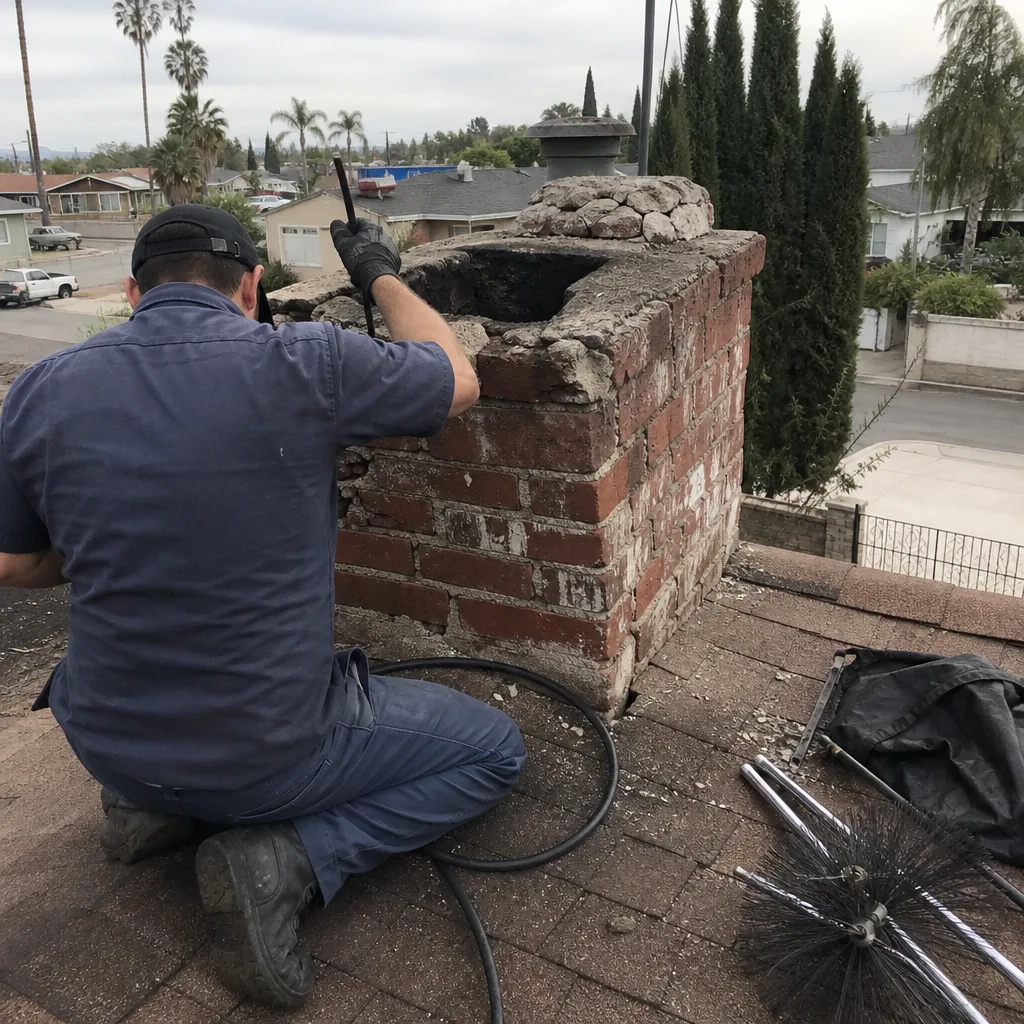 Before
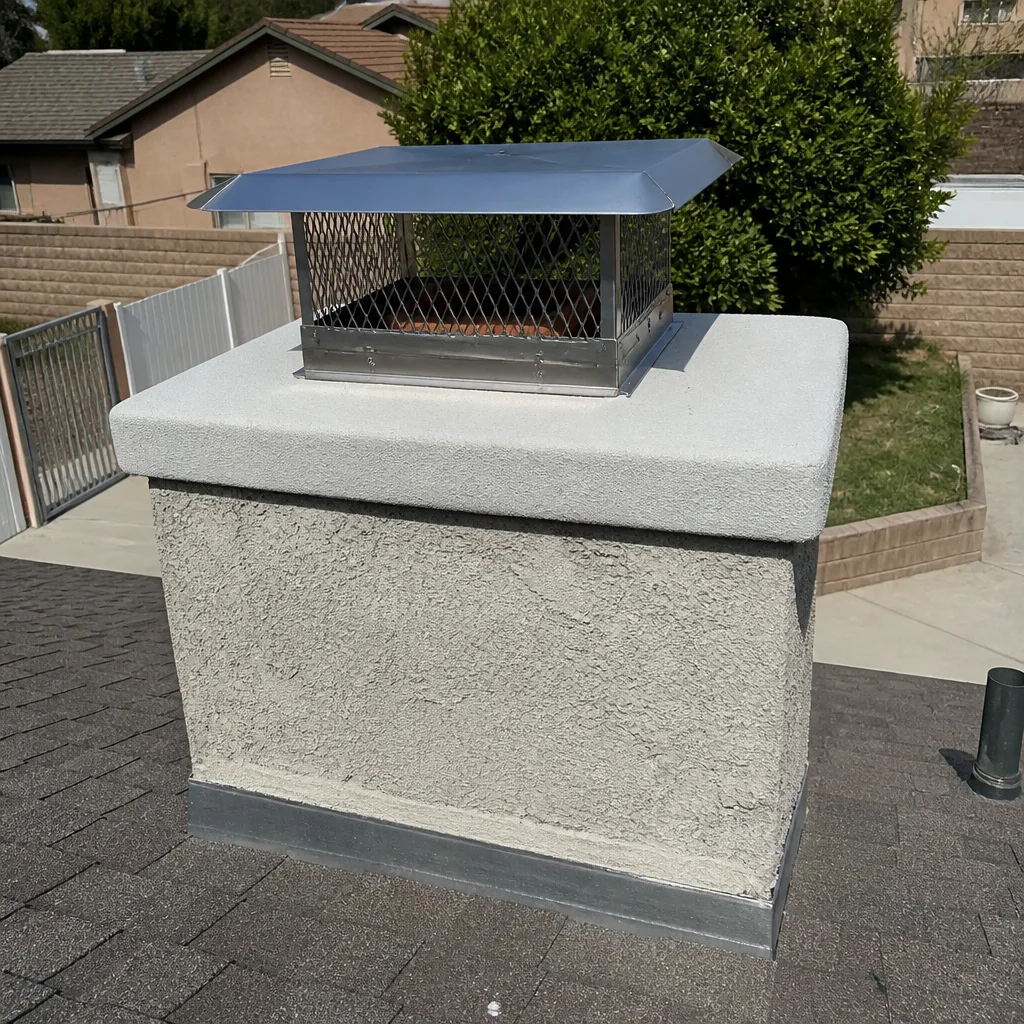 After
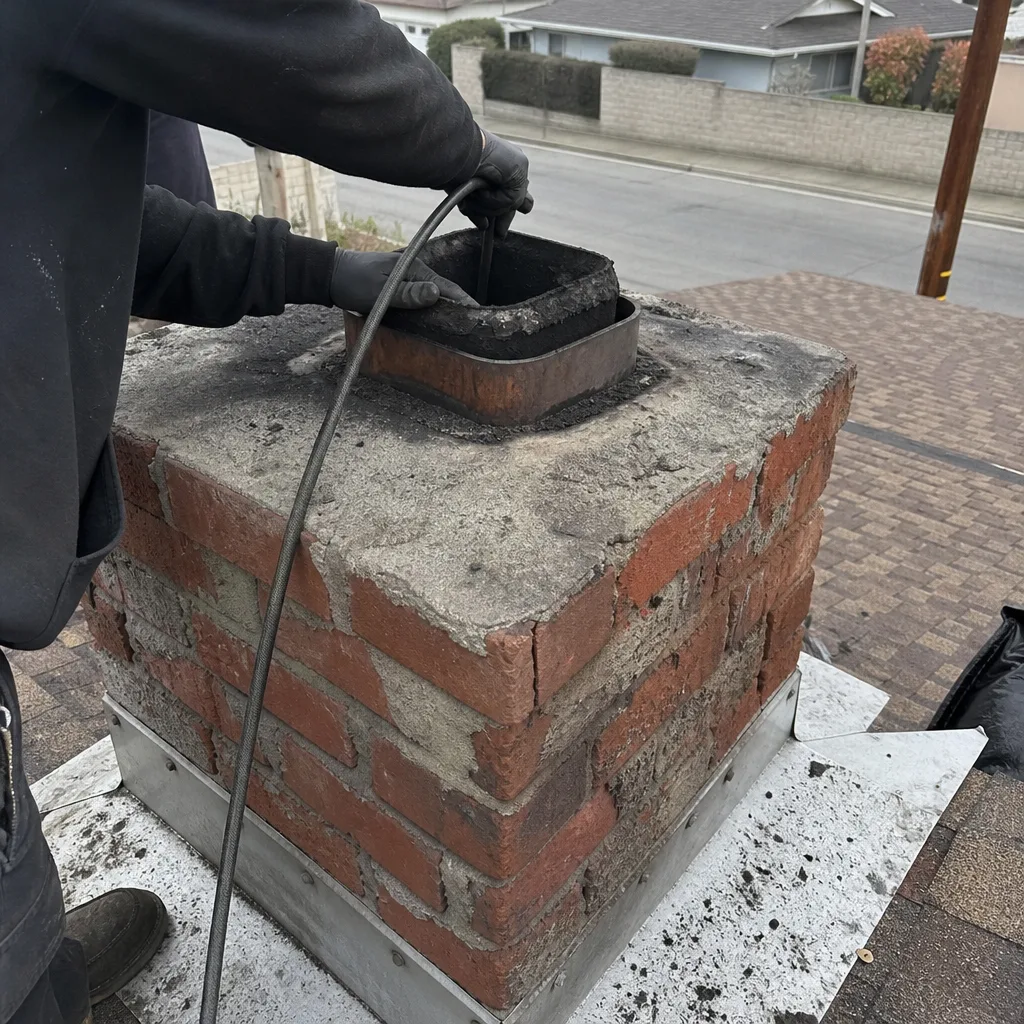 Before
 After
 Before
 After